Tesla Road Noise in 2026: Real Causes and Easy Fixes
Updated for 2026 • Real-world data, practical upgrades, and honest comparisons with other EVs.
If you’ve just stepped into your Tesla, pressed the accelerator and thought, “Why is there so much road noise in here?”, you’re not alone. Electric motors are almost silent, so every sound from the asphalt, wind and tires suddenly becomes much more obvious. In this guide, we’ll break down why Tesla road noise happens, how it compares with other EVs, and the exact upgrades that actually make your Model 3 or Model Y quieter.
What Exactly Is “Tesla Road Noise”?
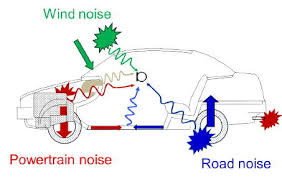
Tesla road noise is the combination of tire roar, wind turbulence and vibrations that enter the cabin through the wheel wells, doors, glass and floor. In a gasoline car the engine masks a lot of this, but in an EV the background is quiet—so the raw road noise stands out.
Owners most often report noticeable road noise in:
- Model 3 (2018–2023) – lightweight body, minimal insulation on early builds
- Model Y (2020–2026) – large open hatch area that can act like a resonator
- Early Model S/X – especially on rough concrete highways
Newer Teslas received improved insulation, but many owners still feel that brands like BMW i4 or Mercedes EQE offer a quieter cabin out of the box.
Main Causes of Tesla Road Noise
Most of the noise in a Tesla comes from five weak acoustic areas. The good news: all of them can be improved with the right upgrades.
1. Tire Type and Tire Age
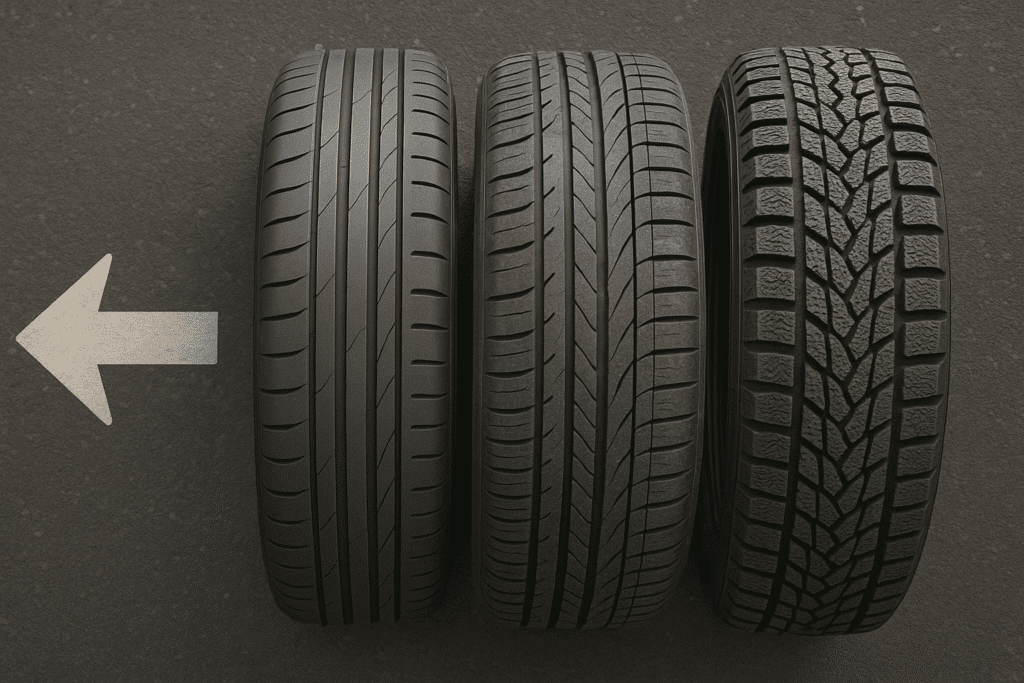
Tires are the number one source of cabin noise in almost every EV. Several factors make them louder:
- Low-profile performance tires transmit more bumps and vibration.
- Economy all-season tires often use harder compounds that get noisier as they age.
- Winter tires have aggressive tread blocks that create a “hum” at highway speeds.
- Cheap no-name tires may not be optimized for acoustic comfort at all.
Because Teslas are quiet mechanically, the difference between a premium acoustic tire and a budget tire can feel huge.
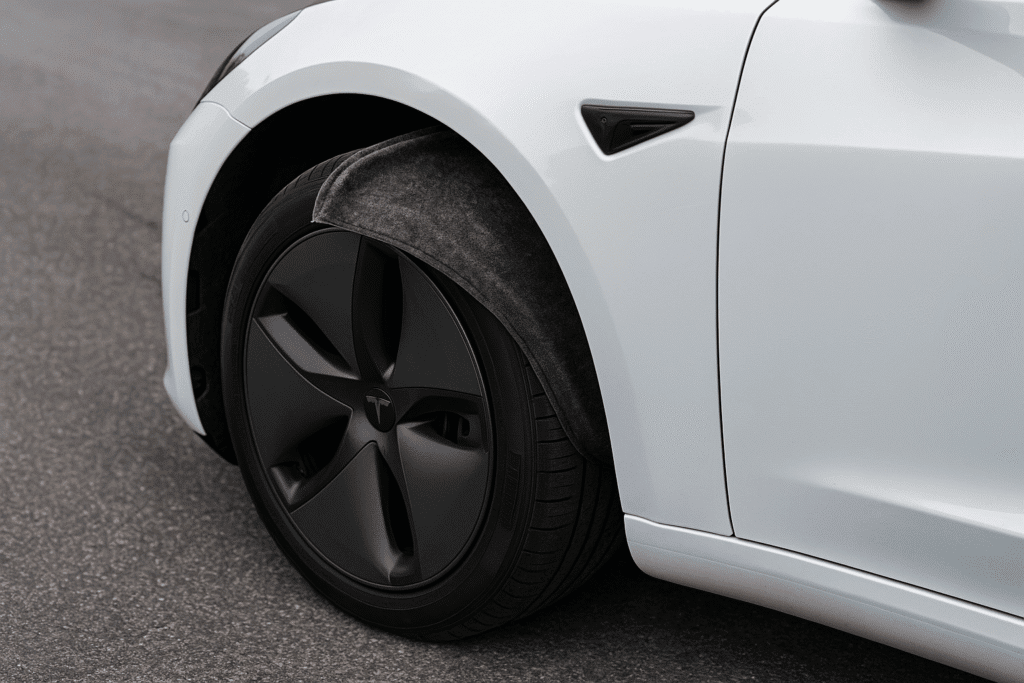
2. Wheel Well Resonance
The wheel wells on the Model 3 and Model Y have relatively thin liners and limited factory sound insulation. At speed, they act like small drums, amplifying the tire noise and sending it directly into the cabin.
Symptom: a “booming” or “roaring” sound that gets much worse on coarse asphalt.
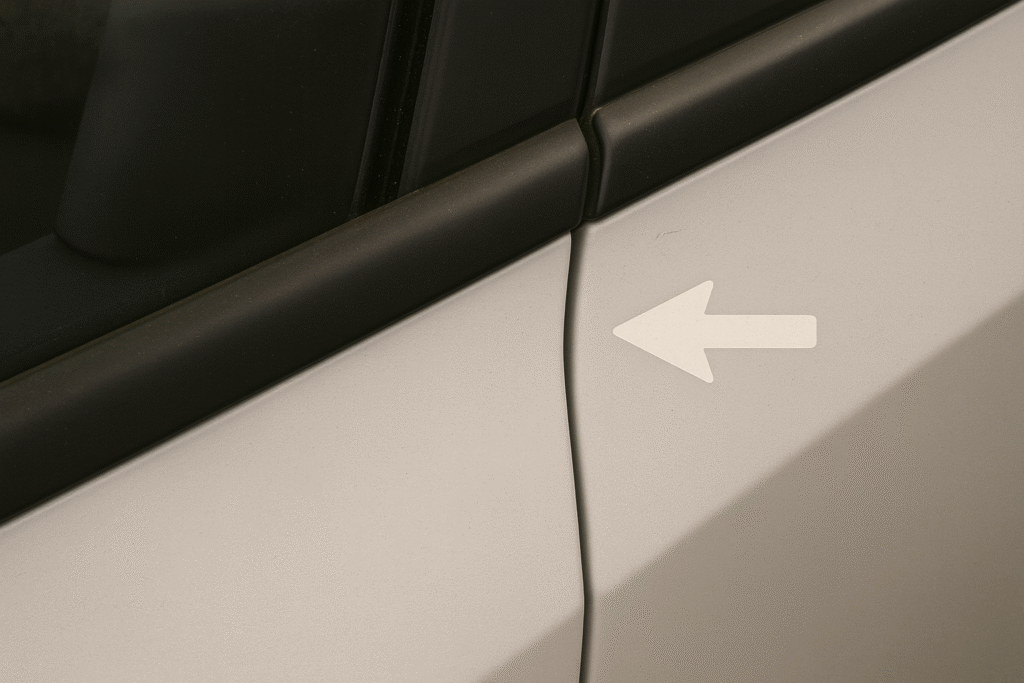
3. Door Seal Gaps
Even tiny gaps around the doors and windows allow both wind and vibration to enter the cabin. As speed increases, air rushes past these gaps and creates a hiss that many owners mistake for tire noise.
Older Model 3/Y builds are especially sensitive to seal quality and alignment.
4. Lightweight Underbody Panels
To maximise efficiency and range, Tesla uses lightweight panels under the car. This is great for performance, but thinner panels also mean less mass to absorb sound. The floor can transmit both tire slap and small stone impacts into the cabin.
5. Glass and Cabin Structure
Early Model 3s shipped with single-pane glass on the side windows. Combined with frameless door designs, this makes high-speed wind noise more noticeable. Newer models with double-pane glass and extra seals perform better.
Is Tesla Road Noise Normal? Benchmark dB Levels
To understand whether your Tesla is “too loud”, it helps to compare it with other EVs measured at 100 km/h (62 mph) on the same type of road.
| Vehicle | Typical Cabin Noise at 100 km/h | Comfort Verdict |
|---|---|---|
| Tesla Model 3 (2021) | 69–71 dB | Noticeable road roar on coarse asphalt |
| Tesla Model Y (2022) | 68–72 dB | Loudest over concrete highway surfaces |
| BMW i4 | 64–66 dB | Very quiet, premium feel |
| Mercedes EQE | 62–65 dB | Among the quietest EVs on sale |
| Hyundai Ioniq 5 | 66–69 dB | Mid-pack; similar to a good ICE sedan |
| Polestar 2 | 67–70 dB | Close to Tesla levels on rough surfaces |
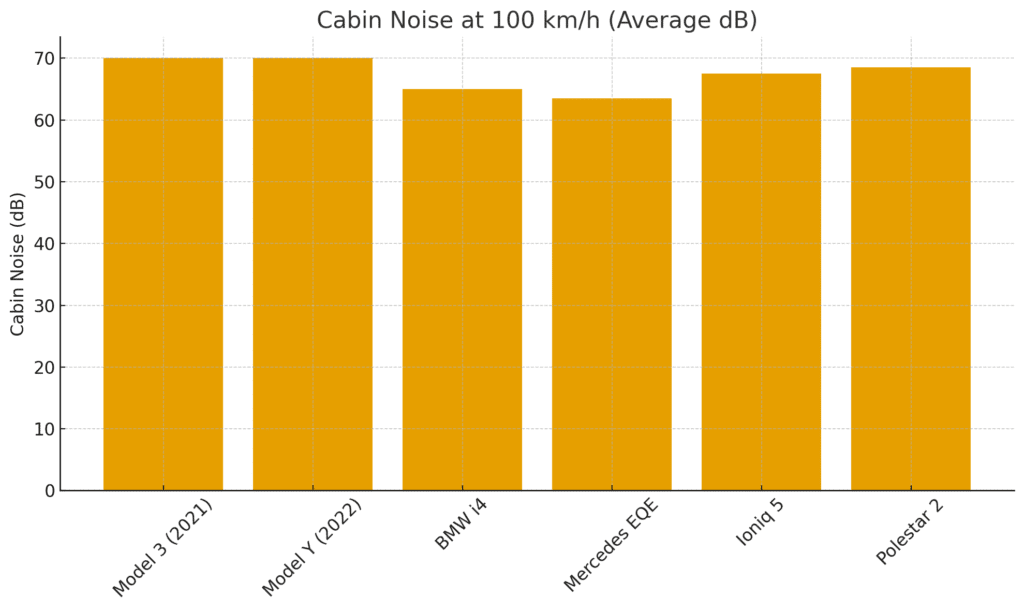
Bottom line: Most Teslas are not defective; they’re simply less insulated than some luxury rivals. The quiet powertrain makes existing road noise more noticeable.
How to Reduce Tesla Road Noise: Fixes That Actually Work
Let’s go through the upgrades that provide the biggest real-world improvement, from the cheapest DIY solutions to full acoustic packages.
1. Install Acoustic Tires (Biggest Single Improvement)
Switching to high-quality, low-noise tires is often the most dramatic change you can make. Many owners report a cabin noise reduction of 5–7 dB when moving from worn budget tires to premium acoustic ones.
Popular low-noise choices for Tesla wheels include:
- Michelin Primacy MXM4 Acoustic
- Continental ProContact RX
- Hankook iON EVO SUV
- Pirelli P Zero Elect
Look for tires marketed specifically as “EV” or “acoustic” versions. They usually contain foam inside the carcass to absorb resonance.
2. Add Wheel Well Soundproofing
Dedicated wheel-well soundproofing kits combine a layer of butyl rubber (for vibration damping) with a layer of closed-cell foam (for absorption). Installed behind the liners, they target the loudest area directly next to the tires.
Typical benefits:
- 3–5 dB reduction in low-frequency rumble
- Much smoother sound on coarse asphalt
- Relatively low cost compared with a full cabin treatment
3. Fit a Door Seal Kit
Aftermarket door-seal kits usually cost less than US$30 and take an hour or two to install. By adding a second line of rubber around the doors and trunk, they reduce both wind hiss and vibration transfer.
Owners often describe the effect as making the car feel “more solid” and “less hollow” at highway speeds.
4. Upgrade to Double-Pane Glass (Where Available)
If your Tesla has single-pane side glass, upgrading to factory double-pane windows or a high-quality aftermarket kit can noticeably quiet wind noise on the freeway, especially above 100 km/h.
On newer Model 3 Highland and recent Model Y builds this improvement is already included from the factory.
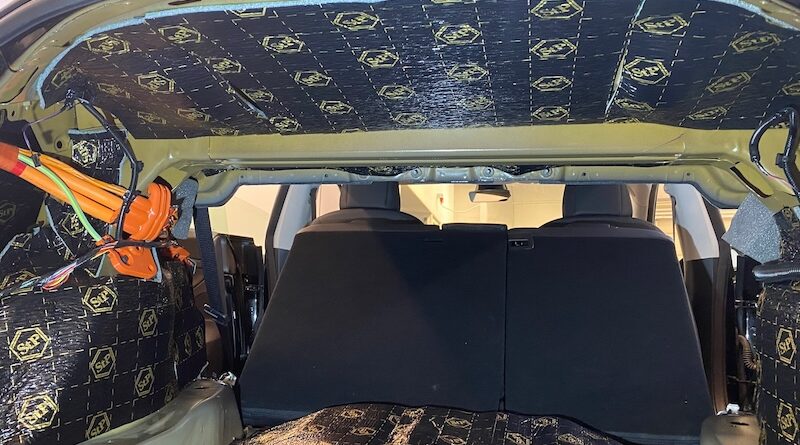
5. Trunk and Hatch Area Soundproofing
On the Model Y, the large rear cargo area acts like an echo chamber. Adding insulation to the trunk floor, side panels and the rear hatch can:
- Reduce booming noise from the rear tires
- Make conversations in the back seats easier
- Improve the perceived “premium” feel of the cabin
Recommended Upgrade Packages
If you don’t want to experiment piece by piece, you can think in terms of simple packages.
Package A – Budget Quiet Pack (~US$40)
- Full door and trunk seal kit
- Foam inserts for A and B pillars where available
Expected improvement: 2–4 dB less wind and edge noise. Great as a first step for older Model 3/Y builds.
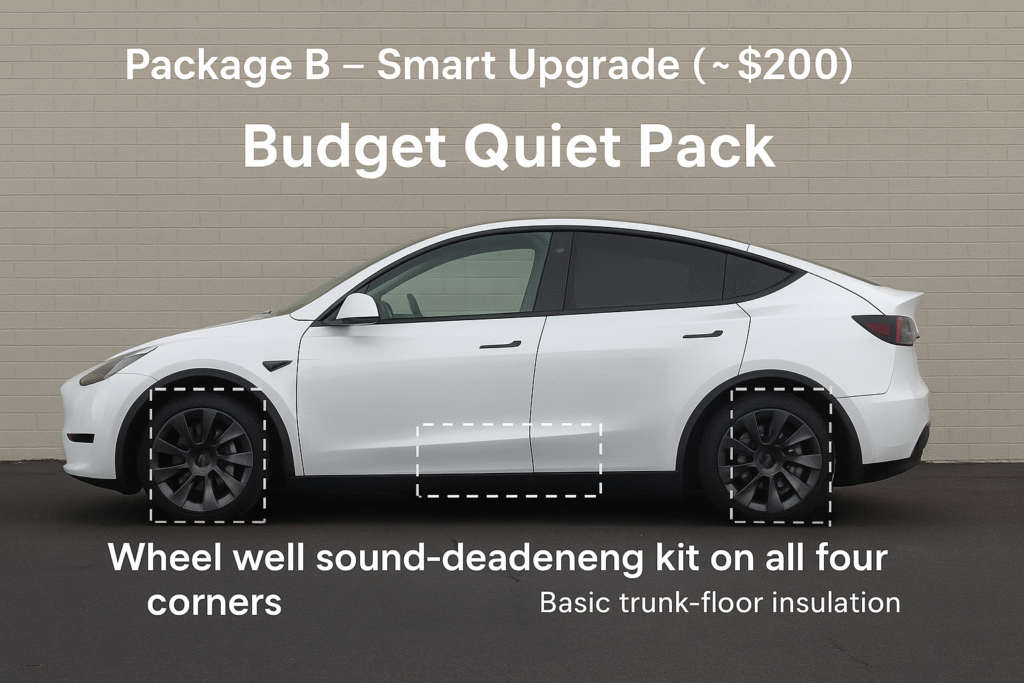
Package B – Smart Upgrade (~US$200)
- Budget Quiet Pack
- Wheel well sound-deadening kit on all four corners
- Basic trunk-floor insulation
Expected improvement: 5–8 dB. For many owners this is the sweet spot between cost and comfort.
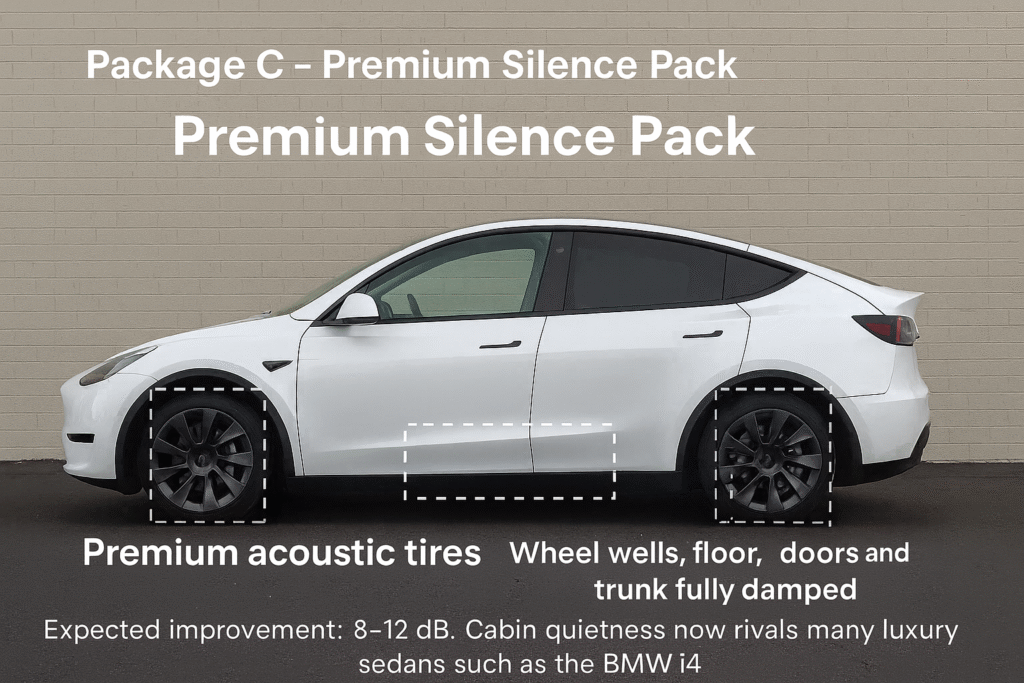
Package C – Premium Silence Pack (US$500–1,200+)
- Premium acoustic tires
- Wheel wells, floor, doors and trunk fully damped
- Double-pane side glass (where available)
Expected improvement: 8–12 dB. Cabin quietness now rivals many luxury sedans such as the BMW i4.
Which Tesla Models Are Noisiest?
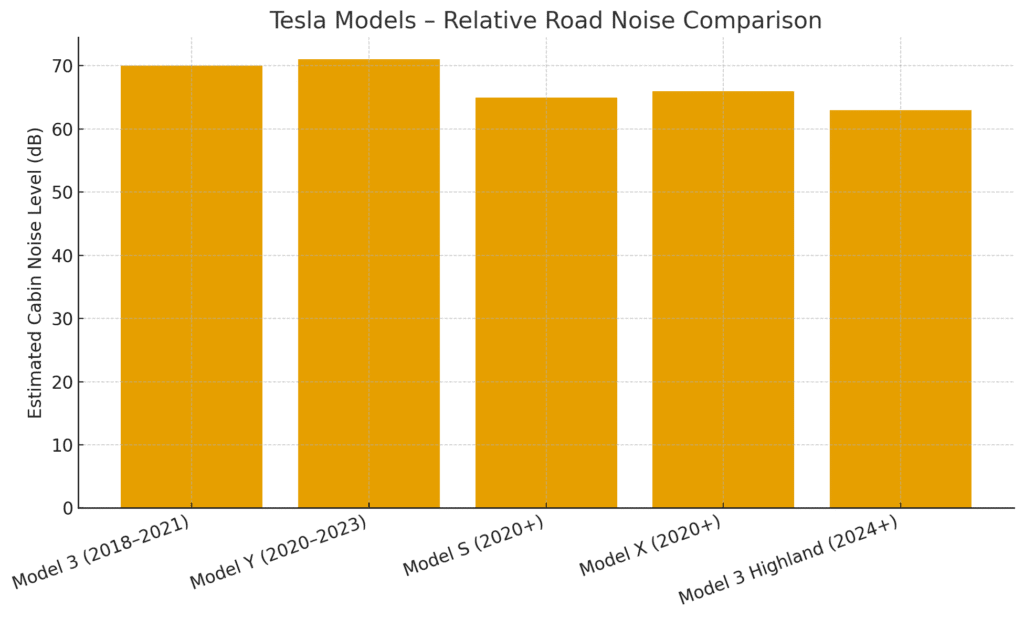
Based on owner reports and independent tests:
- Model 3 (2018–2021): generally the noisiest due to minimal insulation and older glass.
- Model Y (2020–2023): similar road noise to Model 3, with extra boom from the hatch area.
- Model S (2020+): significantly quieter thanks to more insulation and thicker glass.
- Model X (2020+): very good, although the large windshield can still pick up some wind noise.
- Model 3 Highland (2024+) and refreshed Model Y: the quietest Teslas so far, with improved seals and acoustic glass.
Is Tesla Improving Road Noise in Newer Models?
Yes. With each refresh, Tesla has quietly added more acoustic refinement:
- Double-pane glass on more windows
- Extra seals around doors and the trunk
- Improved wheel-well liners
- Quieter heat-pump and HVAC systems
If you own an older car, you can replicate many of these improvements with aftermarket kits rather than trading in your vehicle.
Is Tesla Road Noise a Dealbreaker?
For most people, no. Road noise in a Tesla can be reduced significantly with a combination of better tires, targeted soundproofing and simple door-seal upgrades. If you value instant torque, over-the-air updates and access to the Supercharger network, the comfort tweaks are usually worth the small extra investment.
If you’re still deciding whether an EV fits your life at all, you may want to read our in-depth guide: Should You Buy an EV in 2026? A Realistic Guide.
FAQ: Common Questions About Tesla Road Noise
Does every Tesla have road noise problems?
All EVs expose more road noise than traditional gasoline cars because there is no engine sound to mask it. Early Model 3 and Model Y builds are louder than newer Teslas, but almost every car can be improved with simple upgrades.
Is road noise covered by Tesla warranty?
In general, road noise is considered a comfort characteristic, not a defect, and is not covered as a warranty issue unless there is a specific build problem such as a missing seal or misaligned door.
What is the cheapest way to make my Tesla quieter?
The best budget starting point is a high-quality door-seal kit combined with proper tire pressure. If you still find the cabin too loud, move on to wheel-well soundproofing and better tires.
Will soundproofing reduce my Tesla range?
https://www.tesla.com/learn/introducing-new-model-y
Most sound-deadening materials are relatively light. Even a full acoustic treatment typically adds less than 20–30 kg, which has a negligible effect on real-world range for daily driving.
And if you want a quieter EV from day one, check out our picks for the best EVs under $45K that don’t suck.