
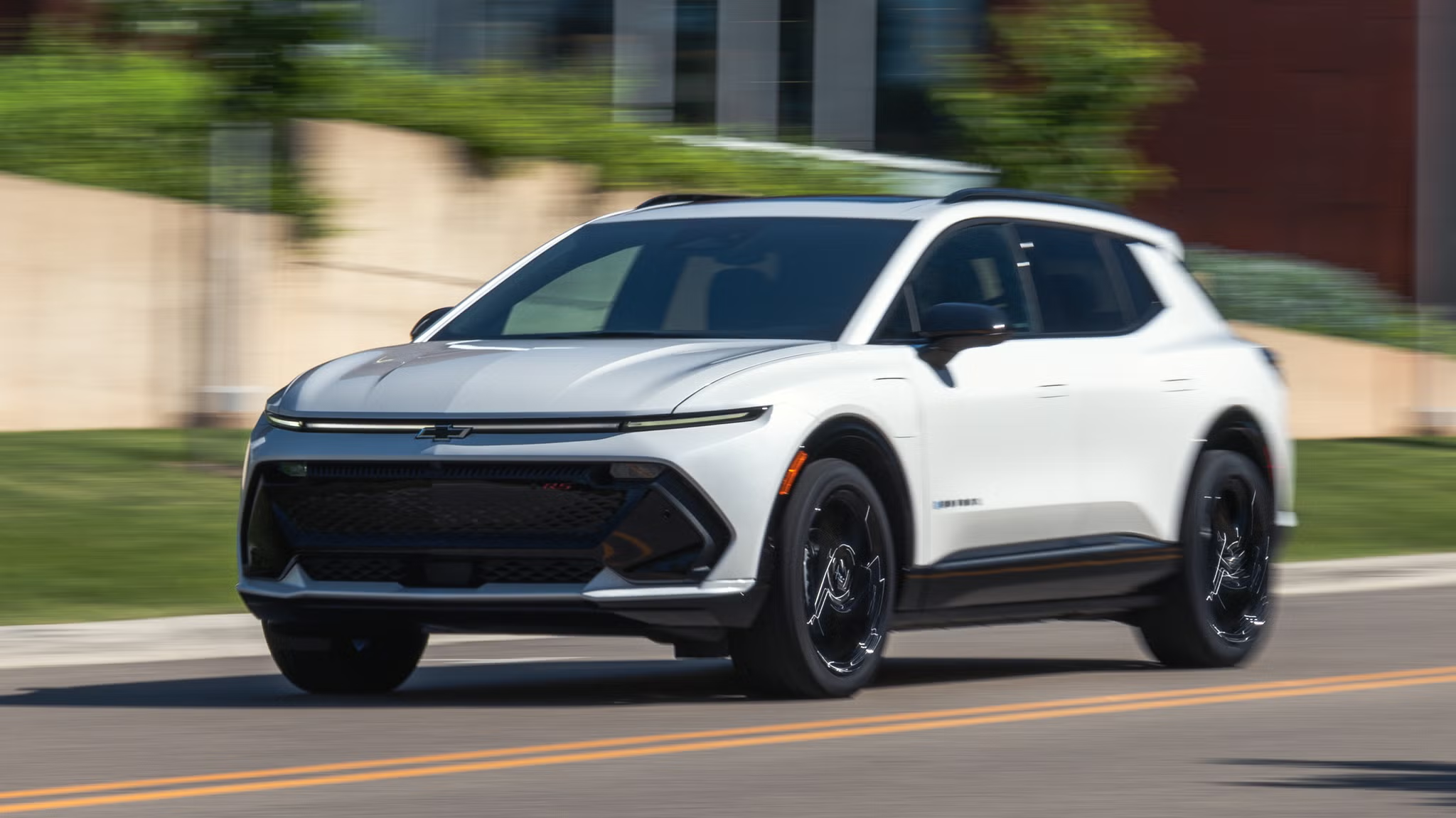
Electric vehicles are known for their efficiency, but many EV owners notice something surprising: the battery percentage sometimes drops even when the vehicle is parked.
This phenomenon is often called “vampire drain” or “phantom battery drain.”
Although it may sound alarming, this behavior is completely normal and occurs in most modern electric vehicles.
Understanding why this happens can help EV owners manage their energy consumption more effectively.
What Is EV Vampire Drain?
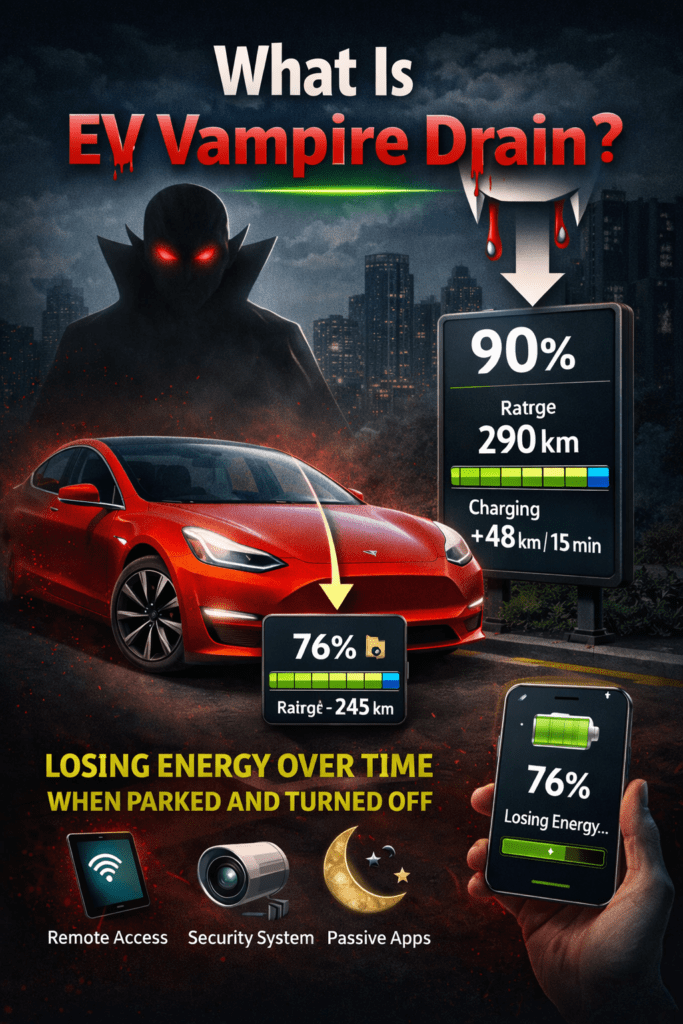
Vampire drain refers to the gradual loss of battery energy while an electric vehicle is parked and not actively being driven.
Even when the car is turned off, several electronic systems continue to consume small amounts of electricity.
These systems include:
- battery management systems
- security monitoring
- wireless connectivity
- remote access services
- temperature monitoring
Because modern EVs function more like computers on wheels, certain systems remain active even when the vehicle is parked.
How Much Battery Loss Is Normal?
The amount of vampire drain varies depending on the vehicle model, software configuration, and environmental conditions.
Typical overnight battery loss:
| Vehicle | Typical Overnight Drain |
|---|---|
| Tesla Model 3 | 1–2% |
| Tesla Model Y | 1–2% |
| Ford Mustang Mach-E | 1–3% |
| Hyundai Ioniq 5 | <1–2% |
| Chevrolet Bolt | <1% |
In most cases, this translates to 2–8 miles of range loss per day.
Source: Tesla owner data, EV forum reports, and manufacturer documentation.
Why EVs Consume Energy While Parked
Electric vehicles maintain several background systems that require continuous power.
Battery monitoring
The battery management system constantly monitors battery health, temperature, and voltage balance.
Connectivity
Many EVs maintain internet connections for:
- mobile app access
- remote diagnostics
- over-the-air software updates
Security features
Sentry mode, alarm systems, and cameras can consume additional energy.
Tesla’s Sentry Mode, for example, can consume 200–300 watts continuously.
Temperature Control and Battery Protection
Lithium-ion batteries must stay within a safe temperature range.
When temperatures are extremely hot or cold, the vehicle may activate heating or cooling systems to protect the battery.
This process can increase vampire drain, especially during winter.
Software Features That Increase Vampire Drain
Certain software features can increase standby energy usage.
These include:
- sentry mode
- frequent mobile app access
- third-party vehicle monitoring apps
- cabin overheat protection
Disabling unnecessary features can reduce idle battery consumption.
How to Reduce EV Vampire Drain
Most EV owners can reduce vampire drain by adjusting a few settings.
Disable Sentry Mode when not needed
Security features that run continuously can significantly increase power consumption.
Limit third-party apps
Some apps repeatedly wake the vehicle to check battery status.
Park in moderate temperatures
Extreme heat or cold may activate battery temperature management systems.
Install the latest software updates
Manufacturers frequently improve energy efficiency through software updates.
Does Vampire Drain Affect Battery Health?
Vampire drain does not significantly harm battery health.
The energy consumption is small and within the normal operating range designed by manufacturers.
Modern EV batteries include sophisticated management systems that protect the battery from long-term degradation.
The Future of EV Energy Efficiency
As EV technology evolves, manufacturers are improving standby energy efficiency.
Newer EV platforms are designed to reduce background power consumption by using more efficient electronic architectures and smarter power management systems.
This means future electric vehicles may experience even lower levels of vampire drain.
Conclusion
EV vampire drain is a normal and expected behavior in modern electric vehicles. Because EVs maintain background systems such as connectivity, security, and battery monitoring, small amounts of energy are consumed even while parked.
In most cases, daily battery loss is minimal and has little impact on overall operating costs.
Understanding how these systems work can help EV owners optimize their vehicle settings and minimize unnecessary energy use.
Sources
U.S. Department of Energy
https://www.energy.gov
Tesla Owner Manual
https://www.tesla.com/support
International Energy Agency EV Outlook
https://www.iea.org