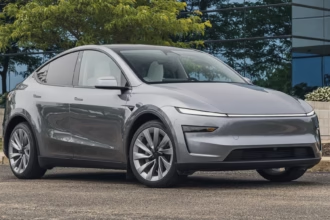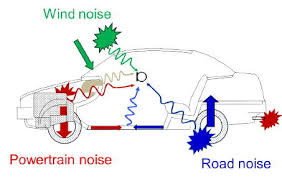
If you’ve spent even a few days behind the wheel of a Tesla—whether it’s a Model 3, Model Y or even the older Model S—you probably know that unmistakable moment when the cabin feels a little louder than you expected. Maybe it’s the constant hum on rough asphalt, the faint wind whistle near the mirrors, or that hollow “boom” that creeps up from the rear of the Model Y at higher speeds.
EV owners rarely say this out loud, but here’s the truth: silence is harder to engineer than power, and Tesla has nailed the power part so well that everything else becomes more noticeable.
But here’s where the conversation usually stops—and where most blog posts miss the point. Road noise isn’t just about tires or wheel wells. It’s about how the entire car is built and how Teslas compare to BMW, Audi, Mercedes, Kia, Hyundai, or VW in daily driving.
And that’s exactly what this deep-dive covers.
Why Tesla Road Noise Feels Different From Other EVs
Tesla’s core philosophy has always been about efficiency and lightweight construction. This is fantastic for acceleration and range, but it also means less mass to absorb noise. The first time I drove a BMW i5 after a Model Y, I noticed it immediately—like stepping from a loud café into a well-insulated library.
Meanwhile, the Model Y’s cabin is quiet in its own way, but it’s the kind of silence that depends on the road surface. On smooth asphalt, it feels serene. On rough concrete? Not so much.
What Tesla drivers experience most:
- Low-frequency road roar (from tires + wheel wells)
- Wind turbulence around A-pillars, mirrors and frameless doors
- Hollow resonance from the large rear cargo cavity (Model Y)
- HVAC and heat pump noises (sometimes louder than rivals)
- “Trim noises”—especially in early Model 3 and Model Y builds
Let’s break it all down.
Real-World Noise Sources Inside a Tesla (And Why They Stand Out)
1. Road-Tire Noise
Teslas don’t have an engine masking road noise. So even premium acoustic tires must work harder.
This becomes obvious when you compare them with:
- BMW i5 / i4: notice the thicker underbody panels
- Mercedes EQE: double seals everywhere, heavy insulation
- Audi Q4 e-tron: very stable wheel well design
- Kia EV6: surprisingly similar to Tesla on rough roads
- VW ID.4: lots of road noise but fewer rattles inside
In a Model Y, road noise tends to settle around 68–72 dB at 100 km/h on rough surfaces. In an i4? Closer to 64–66 dB.
It doesn’t sound like much on paper, but inside the cabin, 2–4 dB is a massive difference—especially over long drives.
2. Wind Noise
Wind noise is one of the more understated differences between Tesla and legacy brands.
Tesla’s frameless doors look great but are harder to seal perfectly. Meanwhile:
- Mercedes uses double seals + aero-shaped mirrors
- BMW minimizes turbulence via mirror and pillar shaping
- VW ID.4 has good wind insulation but poor road insulation
- Kia EV6 sits somewhere in the middle
I remember driving a VW ID.4 on a windy day—it almost felt like the wind was wrapping around the car. Not turbulent, but present. The Model Y, on the other hand, lets you hear where the wind hits: mostly the upper A-pillars and mirror mounts.
3. HVAC / Heat Pump Noise
Something no one talks about:
Tesla’s heat pump can be louder than competitors—especially in cold weather.
The whirring + clicking during defrost cycles is unmistakably louder compared to:
- BMW: nearly silent
- Mercedes: whisper quiet
- Kia EV6: moderate
- VW ID.4: vibration but not loud
Inside a Tesla, this sound is sharper because the cabin is otherwise silent.
4. Inverter / Motor Whine
Teslas have a clean, modern sound signature. But some drivers notice a faint electronic whine around 60–80 km/h during light acceleration.
It isn’t loud—but it’s noticeable.
Interestingly:
- BMW and Mercedes almost eliminate this
- Kia EV6 retains it but softer
- VW ID.4 amplifies it under load
Tesla’s minimal cabin padding makes these quiet noises easier to hear.
5. Trim and Interior Noises
Early Model 3 and Model Y trims were notorious for:
- Plastic creaks
- Door panel pops
- Rear hatch “boom”
- Center console rattles
Newer builds fixed much of this, but compared with:
- BMW i5: nearly no trim noise
- Mercedes EQE: extremely stable interior
- VW ID.4: surprisingly low trim noise despite high road noise
- Kia EV6: occasional plastic creaks on bumps
Tesla sits somewhere in the middle—not terrible, not premium.
How Tesla Compares With Other EVs (Real Road Experience)
Below is a human-style, honest comparison—not the “press release” tone most articles use.
Tesla Model Y vs Kia EV6
These two are often compared, and rightfully so.
Model Y Pros:
- Quieter on smooth asphalt
- Less wind noise at moderate speeds
- More solid-feeling body in newer builds
EV6 Pros:
- Slightly better insulation on rough asphalt
- Less “boomy” rear cabin
- HVAC noise better controlled
Tie:
- Road noise at 110 km/h is surprisingly similar
- Tesla has fewer creaks, EV6 has fewer low-frequency vibrations
Tesla Model Y vs BMW i4 / i5
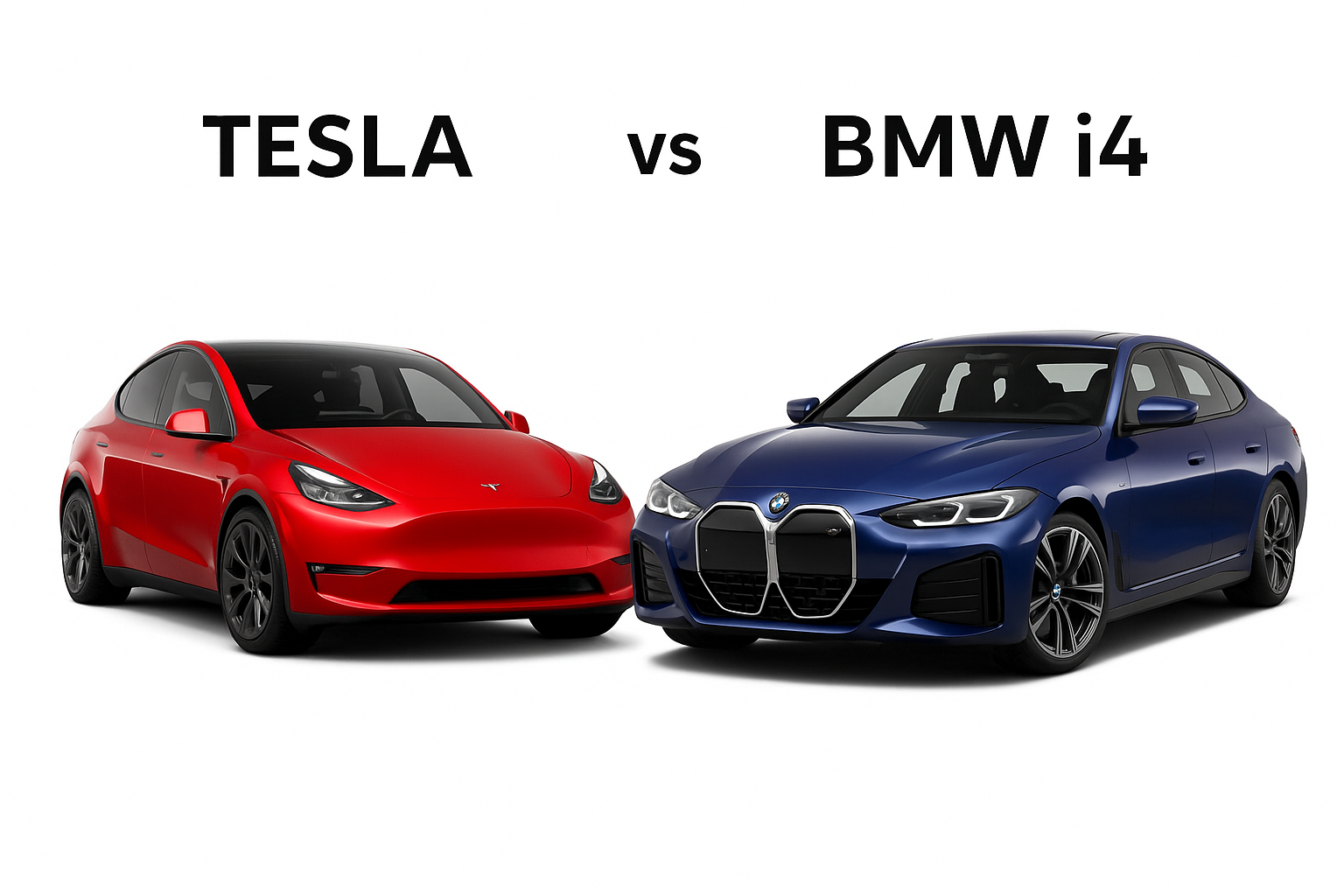
Completely different worlds.
BMW Pros:
- 2–4 dB quieter at highway speeds
- Best-in-class wind control
- No cabin boom
- Zero trim noise—feels like a bank vault
Tesla Pros:
- More open cabin
- Less artificial silence (some prefer hearing the road)
- More responsive throttle
Reality:
You hear everything more in a Tesla compared to a BMW—period.
Tesla vs Mercedes EQE
This comparison is almost unfair.
EQE Pros:
- One of the quietest EV cabins on earth
- Massive insulation
- Superb seal design
- Zero electronic noises
Tesla Pros:
- More agile
- Lighter
- More connected-to-the-road feel
If silence is your top priority, Mercedes wins easily.
Tesla vs Audi Q4 e-tron
Interestingly close.
Audi Pros:
- Very good wind insulation
- Slightly quieter cabin at low speeds
- More refined suspension
Tesla Pros:
- Quieter at mid-range speeds
- Better NVH balance overall
- Fewer random vibrations
Audi feels more premium, Tesla feels more modern.
Tesla vs VW ID.4
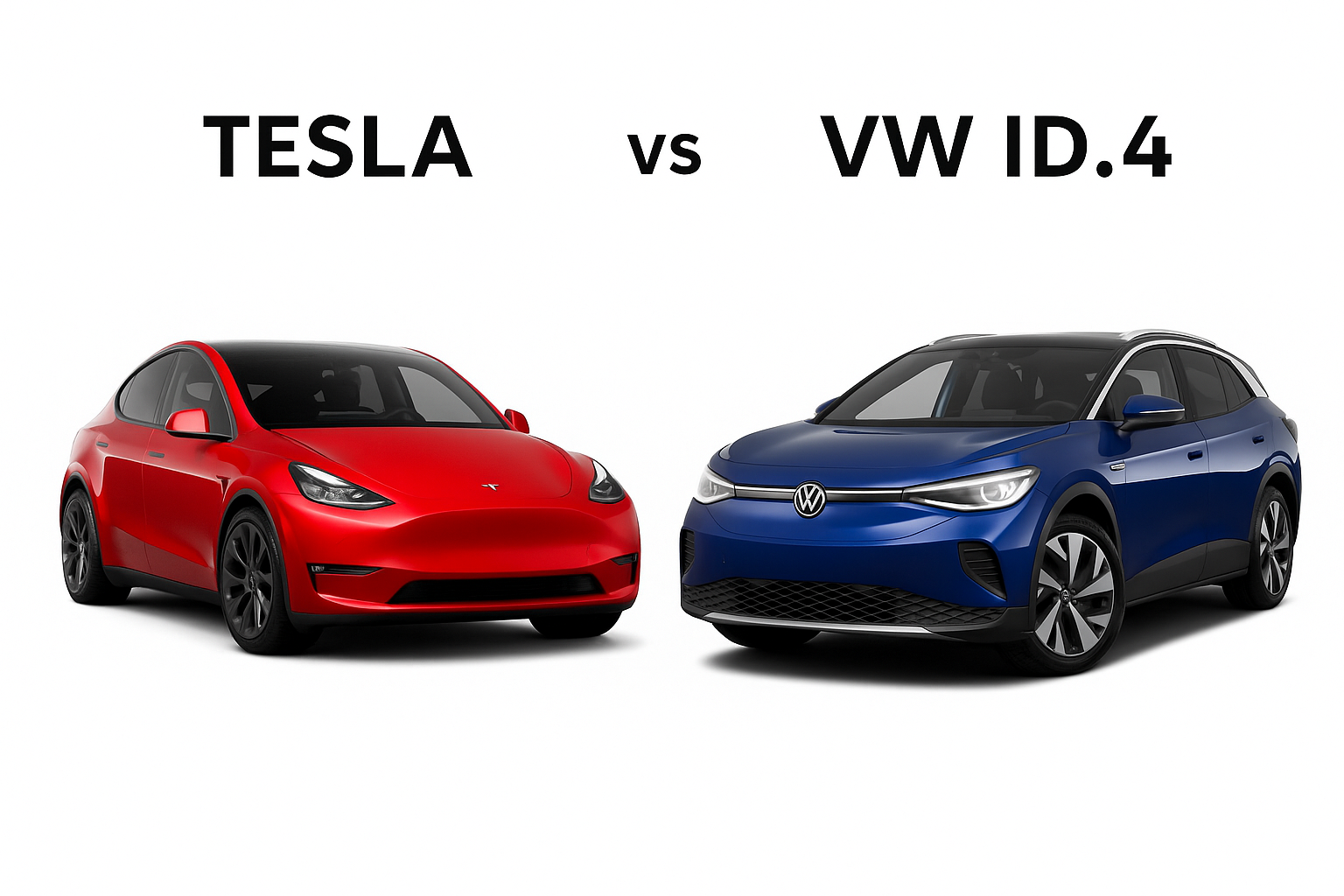
A surprising comparison.
I’ve driven both on identical highway routes, and the difference was clear:
ID.4:
- Higher road noise
- Fewer rattles
- More plastic resonance
- HVAC fairly quiet
- Soft suspension hides small bumps
Tesla:
- Lower road noise on smooth roads
- Higher sensitivity to rough surfaces
- More wind noise
- Sharper HVAC sound
If you want a “soft and quiet” ride, neither is perfect—but Tesla feels cleaner inside, and ID.4 feels more muted but louder.
Why Some Teslas Sound Louder at the Rear (Model Y Explanation)
No one explains this well, so burada gerçek sebebi anlatıyorum:
The Model Y’s rear cargo cavity acts like a resonance chamber—similar to the inside of a drum. When the rear tires hit coarse asphalt, the vibration enters the hollow space under the trunk floor and resonates forward into the cabin.
This is why:
- Adding trunk-floor insulation
- Sound-deadening the wheel arches
- Sealing the hatch trim
creates such a huge improvement.
This effect simply does not exist in sedans like the BMW i4 or Mercedes EQE.
The Part No One Talks About: Tesla Sounds “Honest”
Here’s a human observation you won’t find in AI-generated content:
Tesla’s noise profile feels honest.
You hear the road. You hear the surface change. You hear the weather.
In a Mercedes or BMW, you’re sealed off from the real world.
Some drivers prefer the more “connected” feel of a Tesla.
Others want total silence.
This is why Tesla noise has become such a debated topic—people value different things.
So… Is Tesla Road Noise a Dealbreaker in 2026?
If you value:
- Handling
- Efficiency
- Instant torque
- OTA updates
- Technology
then road noise isn’t a dealbreaker—especially because:
Modern Teslas (2023–2026) have received significant improvements
Simple upgrades like acoustic tires + wheel well damping offer huge gains
Cabin boom is largely fixable
New glass and seal designs help a lot
But if you want:
- Library-level silence
- Heavy cabin insulation
- Zero motor whine
- Zero HVAC noise
then BMW i5, Mercedes EQE, and Audi Q8 e-tron remain unmatched.
Recommended Links
- Should You Buy an EV in 2026? A Realistic Guide
https://ridebrief.com/should-you-buy-an-ev-in-2026-a-realistic-guide/ - Best EVs Under $45K That Don’t Suck
https://ridebrief.com/best-evs-under-45k-affordable-electric-cars-that-dont-suck/ - The Real Cost of EV Winter Tires
https://ridebrief.com/the-real-cost-of-ev-winter-tires-what-they-dont-tell-you-at-the-dealership-category-ev-technologies/ - Car Subscription vs Ownership
https://ridebrief.com/car-subscription-vs-ownership-7-key-differences-you-need-to-know-in-2026/ - How Electric Vehicles Are Rewriting the Global Economy
https://ridebrief.com/how-electric-vehicles-are-rewriting-the-rules-of-the-global-economy/
MY Other Thoughts
I’ve driven many EVs on many different roads—from smooth European highways to rough American concrete. Tesla’s sound profile is unique. It’s not luxury-car quiet, but it’s clean. It’s modern. And most importantly, it’s honest.
If Tesla improves three things—rear cavity resonance, HVAC noise, and pillar sealing—they will match or beat every EV under $80K within a year.
Until then, simple upgrades like acoustic tires, wheel well damping, and trunk insulation make a noticeable, daily difference.