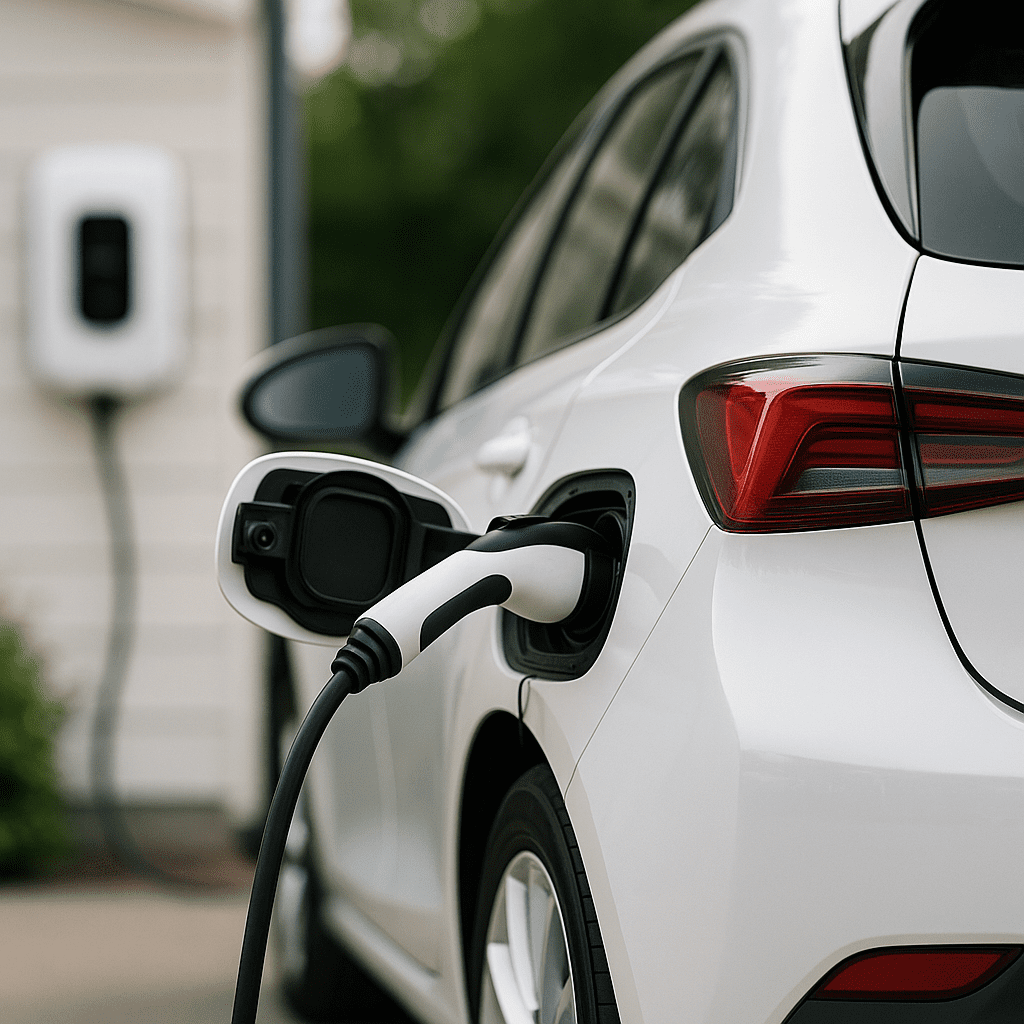
Let me start with the part that doesn’t show up on spec sheets: owning an EV without home charging can feel either surprisingly doable or quietly exhausting. Sometimes both in the same week.
When you have a home charger, EV ownership becomes background noise: you plug in, you sleep, you wake up “full.” Without it, charging becomes a recurring decision-making problem—like planning meals when you don’t have a kitchen. It’s possible, but it changes the rhythm of your life.
This isn’t a “don’t buy an EV” article. It’s an honest, practical guide to what living with an EV in the U.S. looks like when your options are mostly public chargers, workplace charging (if you’re lucky), and a few creative workarounds. I’ll cover what it costs, what it feels like, what usually breaks people’s patience, and what actually makes it work in 2026.
The First Big Surprise: “Public Charging” Isn’t One Thing
A lot of EV advice treats public charging like a single category. In real life, it’s three different worlds:
- Level 2 public charging (slower, often cheaper, sometimes free)
- DC fast charging (fast, convenient, usually expensive)
- Workplace charging (the “EV ownership cheat code” if you can get it)
If you don’t have home charging, your experience depends on which of these becomes your default. The “best case” is workplace Level 2. The “most common” is a mix of paid Level 2 and occasional fast charging. The “roughest” is relying on DC fast charging multiple times per week.
What Charging Actually Feels Like (Apartment Edition)
Here’s the day-to-day feeling that’s hard to explain to someone who hasn’t lived it: you’re always running a tiny mental checklist.
Do I have enough range for tomorrow’s commute?
Is the charger near my grocery store working?
Is it worth fast charging now, or should I risk Level 2 and come back later?
Some weeks it’s fine. Other weeks you’ll show up to your “reliable” station and find two stalls down, one blocked by an ICE car, and one with a screen frozen on “Initializing…”—and suddenly you’re doing math in your head like it’s tax season.
The emotional difference between home charging and public charging is control. EVs are relaxing when you control your charging. They get stressful when charging controls you.
The Real Cost: How Expensive Is EV Ownership Without Home Charging?
Let’s talk money, because this is where expectations get shattered.
If you charge at home in many U.S. states, EV “fuel” can be impressively cheap. But without home charging, you’re often paying public rates that can be 2–5× higher than residential electricity—especially at DC fast chargers.
In 2026, it’s common to see public charging priced by:
- kWh (straight energy pricing, similar to buying “electricity gallons”)
- time (minutes connected)
- tiered pricing (higher rates during peak hours)
- membership discounts (monthly plans reduce per-kWh cost)
Here’s a realistic way to think about it: if your EV averages around 3–4 miles per kWh, your cost per mile depends heavily on whether you’re paying $0.20/kWh or $0.60/kWh.
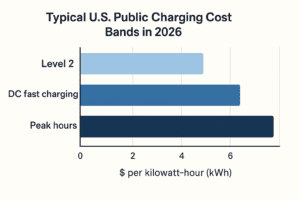
What this means in real life: if you rely mostly on DC fast charging, your “fuel cost” can start to look uncomfortably close to a hybrid. In some high-cost metros, fast charging can feel like paying premium gas prices—just in a different format.
But cost isn’t the only factor. Time is the hidden bill you pay.
The Time Cost: You Don’t Pay at the Pump—You Pay with Planning
Gasoline is brutally efficient at one thing: time. Ten minutes and you’re gone. Public charging flips that relationship.
Without home charging, most owners end up “stacking” charging with other tasks:
- Charging while grocery shopping
- Charging during workouts
- Charging during work hours
- Charging during a coffee break (fast charge)
When it works, it feels smart. When it doesn’t, it feels like your schedule is being negotiated by a broken touchscreen.
One of the most underrated EV skills is learning your local charging ecosystem like you’d learn traffic patterns. You start to know which stations are reliable, which ones are always crowded, and which ones are “technically available” but never actually usable.
Charging Etiquette: The Social Side Nobody Warns You About
If you’ve never owned an EV, you might assume charging is just a personal routine. In reality, public charging is a social system. And the social rules matter—especially when stations are busy.
Here’s the etiquette that keeps you from becoming “that person”:
- Don’t occupy a stall past 80–90% if others are waiting (charging slows and you block the flow).
- Move your car promptly after you’re done—treat it like a shared resource.
- If you’re using Level 2, leave a note (some drivers will politely ask to swap when you’re full).
- Don’t unplug others unless local norms explicitly allow it and you’re sure it’s appropriate.
Etiquette isn’t just politeness—it’s strategy. If you build a reputation as a considerate charger at a small local station, people are more likely to help you out when you’re in a pinch. Yes, that’s a real thing.
Winter Reality: The “No Home Charger” Problem Gets Louder
Winter is where the apartment EV lifestyle can become… intense.
Cold weather hits EVs in two ways:
- Efficiency drops (you need more energy per mile)
- Charging can slow if the battery is cold (especially at fast chargers)
If you have home charging, you can precondition and top off easily. Without it, winter means you need to be more deliberate. The same “I’ll charge later” habit that works in summer can backfire in January.
Practical winter tips that actually help:
- Charge right after driving (battery is warm, charging is faster)
- Use scheduled preconditioning before a fast charge session
- Don’t wait until you’re at 10% in winter (give yourself buffer)
- Plan one reliable backup station near your home route
Apartment EV Ownership: The Workarounds That Make It Sustainable
Here’s the encouraging part: plenty of people do this successfully. The difference is that they build systems.
1) Workplace Charging (If You Can Get It)
If your workplace offers charging—even a handful of Level 2 plugs—it can turn EV ownership into easy mode. Charging while you work is basically the home-charging experience, just relocated.
2) “Anchor Stations” + Routine
Most successful apartment EV owners pick 1–2 anchor stations and build routines around them. It reduces uncertainty, which reduces stress.
3) Membership Plans
If you fast charge regularly, a membership plan can lower per-kWh rates enough to matter. Whether it’s worth it depends on how many sessions you do per month.
4) Don’t Ignore Level 2
DC fast charging feels like the obvious solution, but Level 2 is often the quiet hero. If you can plug in for 2–3 hours while doing errands, you’ll rely less on expensive fast charging.
“Should I Even Buy an EV Without Home Charging?” (The Honest Answer)
Here’s my honest answer: it depends on your lifestyle more than your income.
You’re a good fit if:
- Your commute is moderate
- You have reliable charging near work or routine errands
- You’re comfortable planning a little
- You don’t mind occasional 20–30 minute fast-charge stops
You’ll probably hate it if:
- You have unpredictable long trips every week
- You live in a charger-scarce neighborhood
- You rely on peak-hour DC fast charging as your main “fuel”
- You get stressed easily by uncertainty and waiting
The biggest misconception is that EV ownership without home charging is “impossible.” It’s not. But it is a different style of ownership—more like owning a smartphone with limited outlets. You don’t panic; you learn the system.
A Simple “No-Home-Charging” Cost Reality Check (Quick Math)
If you want a quick reality check, do this:
- Estimate your monthly miles (say, 900–1,200)
- Estimate your EV efficiency (3 mi/kWh is conservative for many EVs)
- Estimate your charging mix:
- 60% Level 2 at $0.25/kWh
- 40% DC fast at $0.55/kWh
That blended cost can still beat gas for many drivers—but it might be closer than you expected. And that’s the point: without home charging, your charging mix becomes the main financial variable.
Recommended Reading on RideBrief
- Should You Buy an EV in 2026? A Realistic Guide
- The Real Cost of EV Winter Tires
- Best EVs Under $45K: Affordable Electric Cars That Don’t Suck
- Car Subscription vs Ownership: 7 Key Differences
Final Take: EV Ownership Without Home Charging Is a Lifestyle Choice
If you’ve never lived with public charging, it’s easy to assume it’s all inconvenience. But there’s nuance. Some drivers love the “charging as a break” rhythm. Others hate the lack of control.
In 2026, the truth is simple: EV ownership without home charging is absolutely possible in the U.S.—but it’s not passive. You’ll spend more time thinking about energy than a home-charging owner does. If you accept that upfront, you can build routines that make it smooth.
And if your building ever installs even a small number of shared Level 2 chargers? The entire experience changes overnight. That’s the moment apartment EV ownership stops being a project and starts feeling normal.