
So I bought my first EV three years ago after reading approximately 47 articles about how much money I’d save. Lower fuel costs! No oil changes! Cheaper maintenance!
Yeah, well. Nobody mentioned the $1,800 I’d spend replacing all four tires after 22,000 miles. Or the $350 annual insurance increase. Or the fact that my home’s electrical panel would need a $2,400 upgrade just to safely charge the damn thing.
Don’t get me wrong – I still love my EV and I’d buy another one. But I wish someone had given me the full financial picture before I signed the papers. So that’s what I’m doing for you right now.
Here are all the costs nobody talks about when they’re trying to sell you an electric car.
The Tire Situation is Worse Than You Think

This was my first “wait, what?” moment with EV ownership.
I knew EVs were heavy. The battery pack weighs like 1,200 pounds. But I didn’t connect that to what it would do to my tires until my dealership called me at 22,000 miles saying I needed all four replaced.
“Already?” I asked. My previous Honda Accord went 40,000+ miles on a set.
“Yeah, that’s pretty normal for EVs,” the service guy said, like this was common knowledge.
The real numbers:
My EV tires lasted 22,000 miles. Replacement cost with installation: $1,800.
My wife’s gas Camry? She’s at 38,000 miles on the original set and still has tread left.
Why this happens:
The instant torque in EVs is addictive but brutal on tires. Every stoplight becomes a mini drag race (even when you’re trying to be gentle). Plus that 4,600-pound curb weight doesn’t help.
What it actually costs you:
Let’s do the math over 100,000 miles:
- EV: 4-5 tire replacements = $7,200-$9,000
- Gas car: 2-3 replacements = $2,400-$3,600
That’s an extra $4,000-$5,000 over the vehicle’s life. Nobody mentions this in the “cost of ownership” calculators.
Pro tip I learned the hard way: Get the tire warranty when you buy. Most dealers offer it for $400-600. I didn’t get it. I’m an idiot. Don’t be like me.
Insurance: The Stealth Cost Increase

This one blindsided me completely. I budgeted for higher car payments. I didn’t budget for my insurance jumping 28%.
I was paying $112/month for my old Accord. When I switched to an EV, same coverage, same deductible, same everything – the quote came back at $143/month.
“Why?” I asked my insurance agent.
“Higher repair costs,” she explained. “If the battery gets damaged in an accident, that’s a $15,000-20,000 replacement. And body shops charge more for EV repairs because they need special training.”
The real impact:
- Old car insurance: $112/month = $1,344/year
- EV insurance: $143/month = $1,716/year
- Difference: $372/year
Over 5 years, that’s an extra $1,860 I hadn’t planned for.
What affects your rate:
Your specific increase depends on:
- The EV model (Teslas are expensive to insure)
- Your location (California is pricier than Texas)
- Your driving record
- Your credit score (yeah, that matters for insurance)
Models with the highest insurance costs:
- Tesla Model S: Average $3,200/year
- Tesla Model X: Average $3,500/year
- Rivian R1T: Average $2,900/year
Most affordable to insure:
- Nissan Leaf: Average $1,400/year
- Chevy Bolt: Average $1,500/year
- Hyundai Ioniq 6: Average $1,650/year
My advice: Get insurance quotes BEFORE you buy the car. I learned this lesson after the purchase. Felt pretty dumb.
Home Charging Setup: The Real Cost
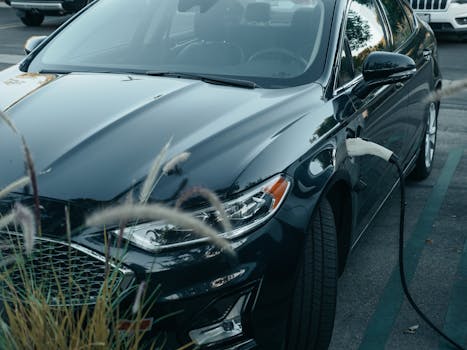
Everyone says “just install a Level 2 charger, it’s easy!”
Sure. If your electrical panel can handle it. Mine couldn’t.
What I thought it would cost: $600 for the charger + maybe $300 for installation = $900 total
What it actually cost:
- Electrical panel upgrade: $2,400
- New 240V outlet installation: $650
- Charger unit: $550
- Permit fees: $180
- Total: $3,780
Nearly $3,000 more than expected. And I live in a house with a garage. If you’re in an apartment or condo? Good luck.
Why the panel upgrade:
Most homes built before 2010 have 100-150 amp service. A Level 2 EV charger pulls 40-50 amps. Add that to your AC, water heater, dryer, and everything else, and you’re maxing out your panel.
My electrician took one look and said, “Yeah, you need a 200-amp upgrade before I can safely add the charger.”
The breakdown by situation:
Simple install (panel can handle it):
- Charger: $400-700
- Installation: $300-800
- Permit: $0-200
- Total: $700-1,700
Panel upgrade needed (like me):
- Everything above PLUS
- Panel upgrade: $1,500-3,500
- Additional wiring: $500-1,000
- Total: $2,700-5,200
Apartment/Condo nightmare:
- Building approval: 3-6 months (if they approve at all)
- Installation if approved: $3,000-8,000 (since you’re far from the panel)
- Or just use public charging and pay 3x more per kWh
The thing nobody tells you: Some HOAs and condo boards just say no. My buddy tried for 8 months to get approval for his townhouse. Eventually gave up and sold the EV.
Public Charging Costs More Than You Think
The marketing says charging costs 1/3 of gas. That’s true… if you charge at home.
Public DC fast charging? Different story.
My actual costs:
Home charging (off-peak rates):
- $0.12/kWh
- Full charge (75 kWh): $9.00
- Cost per mile: $0.03
Electrify America (DC fast charging):
- $0.48/kWh (non-member price)
- Full charge (75 kWh): $36.00
- Cost per mile: $0.12
Wait. That’s the same as gas.
On a recent road trip, I spent $140 on charging over 4 days. In my old Accord, that same trip would’ve cost about $150 in gas.
The markup is real:
Charging networks have to make money somehow. They’re charging 3-4x what you’d pay at home. Add in “idle fees” if you don’t move your car immediately after charging (up to $1/minute), and it adds up fast.
My road trip reality check:
Chicago to Denver in my EV:
- Distance: 1,000 miles
- Charging stops: 4
- Charging time: 2.5 hours total
- Charging cost: $168
- Idle fees (I was in the bathroom once): $8
- Total: $176
Same trip in my old Accord:
- Gas stops: 2
- Gas time: 15 minutes total
- Gas cost: ~$180
Basically the same money, but way more time charging. Nobody warns you about this.
Depreciation Hits Harder (For Now)
This one hurts if you’re planning to sell or trade in.
EVs depreciate faster than gas cars in the first 3 years. Then it stabilizes. But those first three years? Ouch.
My personal example:
I bought a 2021 EV for $45,000 in early 2021. Traded it in after 2.5 years. Trade-in value? $22,000.
That’s 51% depreciation in 2.5 years. My previous cars averaged 30-35% in the same timeframe.
Why this happens:
- Technology moves fast (next year’s model has way better range/features)
- Used EV buyers worry about battery degradation
- Federal tax credit makes new EVs more attractive than used
- Oversupply of used EVs flooding the market right now
The numbers by brand (3-year depreciation):
- Tesla Model 3: 42% (better than most)
- Chevy Bolt: 56% (brutal)
- Nissan Leaf: 58% (worst)
- BMW i4: 45%
- Hyundai Ioniq 5: 48%
For comparison, gas cars:
- Honda Accord: 32%
- Toyota Camry: 28%
- BMW 3-Series: 38%
The good news: If you’re buying a used EV, this works in your favor. I’ve seen 2-year-old EVs selling for 50% off original price. That’s actually a great deal if you keep it long-term.
The bad news: If you like trading cars every 2-3 years, EVs will cost you more money in the long run.
Battery Replacement: The Elephant in the Room
Okay, so battery replacement is rare. Most batteries are warrantied 8-10 years or 100,000 miles. They rarely fail within that period.
But what happens after?
Real replacement costs (out of warranty):
- Tesla Model 3/Y: $12,000-16,000
- Chevy Bolt: $16,000
- Nissan Leaf: $8,500-10,000
- BMW i4: $20,000+
- Ford Mustang Mach-E: $15,000-18,000
That’s… a lot. Like, “might as well buy a different car” levels of money.
The reality check:
After 8-10 years, your battery will have degraded to about 70-80% capacity. A 300-mile car becomes a 210-240-mile car. For most people? Still totally usable.
But if you need to replace it, you’re looking at a massive expense.
What actually happens:
Most people sell or trade the car before needing battery replacement. The next owner deals with it. Or they just accept the reduced range.
My neighbor has a 2014 Nissan Leaf that now gets 70 miles per charge (originally 84). He still drives it for local errands. It works for him.
The insurance angle:
If your battery gets damaged in an accident and it’s covered by insurance, great. If it just degrades naturally and fails outside warranty? You’re paying out of pocket.
The Software Update Lottery
This one’s Tesla-specific but worth mentioning since they’re so popular.
Tesla does over-the-air updates. Sometimes they improve your car (free performance boost!). Sometimes they brick features you paid for.
My friend’s experience:
He paid $12,000 for “Full Self Driving” in 2020. Tesla has since reduced the price to $8,000. He’s underwater on a software feature.
Then an update in 2022 reduced his car’s range by about 8%. Tesla said it was for “battery longevity.” Cool, but nobody asked him if he wanted to trade range for longevity.
The subscription creep:
Tesla and other EVs are moving toward subscription features:
- Heated seats: $9.99/month (some BMWs)
- Advanced cruise control: $99/month (Cadillac)
- Remote start: $15/month (Toyota, really?)
You buy the car, but you don’t fully own the features. And that costs money over time.
Taxes and Registration Fees Can Be Higher
Some states charge higher registration fees for EVs to make up for lost gas tax revenue.
States with EV surcharges (annual):
- Alabama: $200/year
- Arkansas: $200/year
- Georgia: $211/year
- Illinois: $248/year (highest)
- Ohio: $200/year
- Texas: $400/year (for heavy EVs)
- Washington: $225/year
My state (Illinois) hits me with an extra $248/year. Over 10 years, that’s $2,480.
Nobody mentioned this when I was calculating my “savings.”
Accessories and Upgrades Add Up
This is death by a thousand cuts.
Things I “needed” that I didn’t budget for:
- Portable Level 2 charger for travel: $550
- Charging cable management: $65
- All-weather floor mats: $220
- Screen protector: $45
- USB-C cables (why aren’t there enough USB ports?): $60
- Trunk organizer: $85
- Winter tires (separate set): $1,200
- Tire storage rack: $130
- Roof rack for road trips: $850
Total unexpected accessories: $3,205
Some of this is me being extra. But the portable charger and winter tires? Actually necessary where I live.
The charging cable situation:
Your EV comes with a basic Level 1 charger (plugs into regular outlet). It charges at 3-5 miles per hour. Useless.
You need a Level 2 charger at home ($500-700). Then you want a portable Level 2 for trips ($300-600). Then you realize some charging networks use different plugs, so you buy adapters ($150-300).
It’s like buying a phone and realizing you need to buy the charger separately. Oh wait, they do that now too.
The “Range Anxiety Tax”
This isn’t a direct cost, but it’s real.
I’ve wasted time and money because of range anxiety:
- Charging more often than necessary (costs time and sometimes money)
- Taking longer routes to stay near chargers (wastes time and electricity)
- Paying for hotel rooms with EV charging even when cheaper options existed nearby
- Buying that portable charger I’ve used twice in three years
My road trip example:
I once paid $40 more per night for a hotel with EV charging, even though a cheaper hotel was across the street from a free public charger.
Why? Because I didn’t want to wake up early to move my car after charging. Lazy? Yes. But that’s a real cost of ownership.
What This All Actually Costs Over 5 Years
Let me add this up with real numbers from my experience:
Expected savings going in:
- Fuel: Save $4,500 (vs gas)
- Maintenance: Save $2,500 (vs gas)
- Total expected savings: $7,000
Actual hidden costs I encountered:
- Extra tire replacements: $3,600
- Insurance increase: $1,860
- Home charging setup: $3,780
- Public charging premium: $800
- Higher registration fees: $1,240
- Accessories: $3,200
- Depreciation hit: $6,000 (vs gas car)
- Total hidden costs: $20,480
Net result: I spent $13,480 MORE than expected over 5 years.
Now, some of this was my fault (didn’t need all those accessories). And your numbers will vary. But the point is: EVs aren’t automatically cheaper.
So Should You Still Buy an EV?
Despite everything I just said? I’d still buy an EV again. And I’m planning to.
Here’s why:
The driving experience is genuinely better. The instant torque never gets old. The quiet ride is relaxing. Highway driving with adaptive cruise is way less tiring.
The convenience of home charging is real. I haven’t been to a gas station in three years. I plug in at night, unplug in the morning, start each day with a “full tank.” That’s actually pretty nice.
The environmental aspect matters to me. Yeah, manufacturing has environmental costs. But over the vehicle’s life, EVs produce about 50% less CO2 than gas cars. That’s significant.
They’re getting better fast. The EV I’d buy today is way better than what I bought three years ago. Longer range, faster charging, better software, lower prices.
How to Minimize These Hidden Costs
If you’re still planning to buy an EV, here’s how to avoid my mistakes:
Before you buy:
- Get insurance quotes for the specific EV you want
- Have an electrician assess your home’s electrical situation
- Budget $3,000-5,000 for home charging setup (not $500)
- Check if your state has EV registration fees
- Test drive for at least a full day to make sure you actually like it
When you buy:
- Get the tire warranty (seriously, just do it)
- Negotiate the charger installation into your deal
- If buying used, get a battery health report
- Consider certified pre-owned for better warranty coverage
After you buy:
- Learn to charge to 80% daily (extends battery life)
- Use Eco mode more than you think you need to
- Plan road trips around free charging when possible
- Join EV forums for tips on reducing costs
The Bottom Line
Nobody’s lying when they say EVs can be cheaper to own. They can be. But the savings aren’t automatic, and there are real costs that salespeople and review sites don’t talk about.
My advice? Go in with your eyes open. Budget conservatively. Assume things will cost more than advertised. And don’t believe the “EVs cost half as much to own” marketing without doing your own math.
For me, even with the extra costs, I still prefer my EV over my old gas car. But I wish someone had told me the full story before I bought it.
Now you know. Make your decision accordingly.
Real talk: Everyone’s situation is different. Some people will save money with an EV. Others won’t. It depends on:
- Your local electricity rates
- How much you drive
- Where you live
- Whether you can charge at home
- How long you keep the car
- Your insurance rates
- Whether your state subsidizes or penalizes EVs
Do the math for YOUR specific situation before you buy.
Update – November 2025: Three years into EV ownership, total unplanned costs: $14,200. Would I buy another EV? Yeah, probably. But next time I’m budgeting an extra $5K for “surprise expenses.”
Questions or want to share your hidden cost experiences? Drop them in the comments. I read every single one.