
Let me be straight with you. If you were planning to buy an electric vehicle and counting on that sweet $7,500 federal tax credit, I’ve got some news that might sting a little. The federal EV tax credit officially ended on September 30, 2025. Gone. Finished. No more.
I’ve spent the last few weeks digging through state programs, utility rebates, and every incentive I could find. What I discovered surprised me. So grab a coffee, because we’re going to walk through everything that’s still available and figure out how to make your EV purchase as affordable as possible.
What Happened to the Federal Tax Credit? A Quick Reality Check
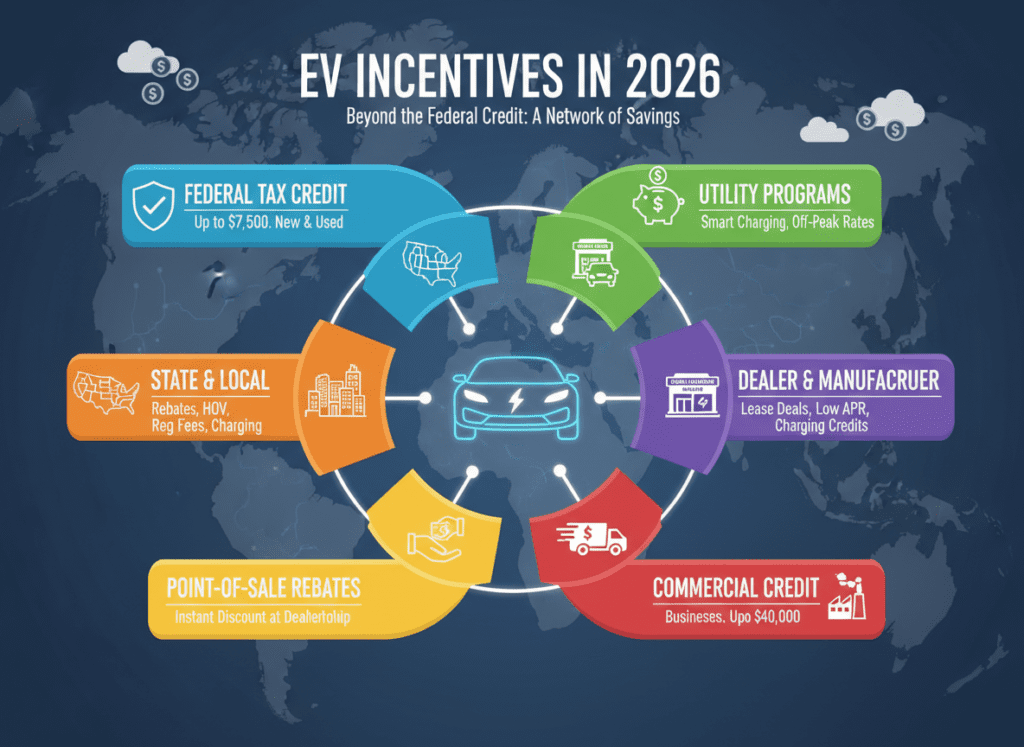
The federal EV tax credit was part of the Inflation Reduction Act, and it was supposed to last until 2032. But then the One Big Beautiful Bill came along in July 2025 and changed everything. The credit got axed effective September 30, 2025.
Here’s the silver lining though – if you managed to sign a binding contract and put down any payment before that deadline, you can still claim the credit when you file your taxes, even if your car wasn’t delivered until later. So if you’re reading this and you got your paperwork in before the cutoff, don’t forget to file Form 8936 with your return.
For everyone else? We need to look elsewhere. And honestly, that’s not as bad as it sounds.
The EV Charger Tax Credit: Your Last Federal Opportunity
Here’s something a lot of people don’t realize – there’s still a federal tax credit available, just not for the car itself. The Alternative Fuel Vehicle Refueling Property Credit (that’s the official IRS name, but let’s just call it the EV charger credit) is still alive and kicking until June 30, 2026.
If you install a home charging station before that deadline, you could get 30% of the total cost back, up to $1,000. That includes the charger itself, installation labor, wiring, and even electrical panel upgrades if they’re needed specifically for the charger.
But here’s the catch – and there’s always a catch, right? Your home needs to be in an eligible census tract. Specifically, it needs to be in either a low-income community or a non-urban area. About two-thirds of Americans actually qualify, which is more than you might expect.
You can check if you qualify using the Department of Energy’s eligibility tool. Just punch in your address and it’ll tell you whether you’re in a qualifying area. If you are, get moving on that charger installation because June 2026 will be here before you know it.
For businesses, the numbers get even more interesting – up to $100,000 per charging port if you meet prevailing wage and apprenticeship requirements. That’s serious money for fleet operators or businesses looking to add charging stations for employees or customers.
State Incentives: Where the Real Action Is Now
With the federal credit gone, states have stepped up in a big way. Some have even expanded their programs specifically because Congress pulled the rug out from under EV buyers. Let me walk you through some of the best options out there.
Colorado has gone all-in on EV incentives. They announced expanded rebates literally days after the federal credit expired. Through the Vehicle Exchange Colorado program, you can get up to $9,000 for a new EV or up to $6,000 for a used one. The catch? You need to trade in an older, high-emitting vehicle. There’s also a state tax credit of $3,500 for new EVs with an MSRP up to $80,000, plus an additional $2,500 if the car costs under $35,000. Fair warning though – that base credit drops to $750 starting January 2026, so time matters here.
California still offers the Clean Vehicle Rebate Project with up to $2,500 for qualifying EVs, and low-income households can get up to $4,000. But California really shines in its local incentives – different air quality districts and utility companies offer their own rebates. The Bay Area Air Quality Management District, for example, offers up to $9,500 for income-qualifying residents who retire an older car and replace it with a new EV. That’s real money.
New York’s Drive Clean Rebate program knocks up to $2,000 off the price of a new EV right at the dealership. Over 60 models qualify, and the rebate amount varies based on the car’s range and sticker price. Higher range generally means a higher rebate.
New Jersey offers $1,500 through the Charge Up New Jersey program for new EVs, and income-qualifying buyers can get an additional $2,500 through Charge Up+ for a total of $4,000. Plus, EVs are exempt from state sales tax, which in New Jersey means you’re saving an extra 6.625% on your purchase. On a $40,000 car, that’s another $2,650 in your pocket.
Oregon and Maine both offer rebates up to $7,500 for qualifying purchases, essentially matching what the federal credit used to provide. Oregon’s Charge Ahead Rebate program even offers up to $7,500 for income-qualifying buyers on new EVs.
Washington State has a low-income instant rebate program offering up to $9,000 for a new battery electric vehicle lease of 3+ years. Even if you’re not low-income, there’s a sales tax exemption for EVs up to $45,000 MSRP for new vehicles and $30,000 for used.
New Mexico introduced a Clean Car Tax Credit offering $3,000 for new EVs and $2,500 for used ones through 2026. It’s not as flashy as some other states, but it’s straightforward and doesn’t have as many hoops to jump through.
Utility Company Rebates: The Hidden Goldmine
Here’s something that flies under the radar for most EV shoppers – your electric utility probably offers incentives too. These are completely separate from state and federal programs, which means you can stack them.
Black Hills Energy customers in Colorado can get up to $5,500 toward a new or pre-owned electric vehicle. That’s on top of the state incentives I mentioned earlier.
PG&E in California offers a $1,000 rebate for purchasing a pre-owned EV, with up to $4,000 available for income-qualified customers. Southern California Edison has similar programs.
NV Energy in Nevada provides $2,500 rebates for low-income customers purchasing new or used EVs.
Almost every utility offers discounted time-of-use rates for EV charging. This means if you charge your car overnight (when demand is lowest), you pay significantly less per kilowatt-hour. Over the life of your vehicle, this can add up to thousands of dollars in savings. That’s part of what makes understanding the true cost of EV ownership so important.
My advice? Before you buy any EV, call your utility company or check their website for EV programs. You might be surprised what’s available.
Used EVs: Still a Smart Play in 2026
The federal used EV tax credit (which offered up to $4,000) ended alongside the new vehicle credit. But used EVs remain one of the best values in the automotive market right now, and several states still offer specific incentives for pre-owned electric vehicles.
Colorado’s Vehicle Exchange program offers up to $6,000 for used EVs. Vermont’s Drive Electric program provides up to $5,000 for buying a used high-efficiency vehicle. California utilities like LADWP offer up to $1,500 for used EV purchases.
Beyond incentives, used EV prices have dropped significantly as more new models hit the market. You can find three-year-old EVs with plenty of battery life remaining for half what they cost new. And remember – electric vehicles have fewer moving parts than gas cars, so a used EV with 50,000 miles often has a lot more life left in it than a comparable gas car.
If you’re considering a used EV, definitely read up on battery health and what to look for before you buy. Understanding when batteries typically need replacement and how to evaluate battery condition can save you from expensive surprises down the road.
The Registration Fee Reality Check
I’d be doing you a disservice if I only talked about the good stuff. Here’s something you need to factor into your calculations: most states now charge higher registration fees for electric vehicles.
The reasoning makes sense from a policy perspective – EVs don’t pay gas taxes, which fund road maintenance. But from your wallet’s perspective, it means extra costs. Indiana charges $230 annually for EVs. North Carolina went up to $214.50. Tennessee doubled their fee to $200.
It’s not a dealbreaker by any means – you’ll still likely save money compared to gas over time – but it’s important to factor these fees into your total cost of ownership calculations. The hidden costs of EV ownership are real, and registration fees are just one piece of that puzzle.
Business and Fleet Buyers: Your Options Are Actually Pretty Good
If you’re buying an EV for business use, there’s still a significant tax advantage available through Section 179 depreciation. Businesses can deduct up to $31,300 when purchasing a new vehicle with a gross vehicle weight rating of at least 6,000 pounds – and that includes larger EVs like the Rivian R1S or Ford F-150 Lightning.
The vehicle needs to be used more than 50% for business purposes, so this won’t help if you’re just trying to write off a personal vehicle. But for legitimate business use, it’s a substantial deduction that can significantly offset the purchase price.
Fleet operators should also look into state and utility fleet programs. Many states offer specific grants and incentives for commercial fleet electrification that aren’t available to individual buyers. This ties into how vehicles are becoming utility hubs for businesses.
How to Stack Incentives: A Practical Strategy
The key to maximizing your savings in 2026 is stacking multiple incentives together. Most state rebates, utility incentives, and the charger credit can all be combined. Here’s a real-world example of how this might work:
Let’s say you’re in Colorado, buying a new EV priced at $33,000 while trading in your old gas car. You could potentially combine the state tax credit ($3,500 base + $2,500 for lower-cost vehicles), Vehicle Exchange Colorado rebate (up to $9,000 depending on income), utility rebate from Black Hills Energy ($5,500), and the federal charger credit ($1,000). That’s potentially over $20,000 in combined savings.
Now, not everyone will qualify for all of these – income limits, trade-in requirements, and utility service area all factor in. But the point is that by layering available programs, you can often match or exceed what the federal credit alone used to provide.
What About Leasing?
Leasing used to be a clever workaround for the federal tax credit – the leasing company could claim the credit and pass savings along to you through lower monthly payments. That loophole closed along with the rest of the clean vehicle credits.
However, leasing can still make sense for other reasons. EV technology is evolving rapidly, and a lease lets you upgrade to newer technology every few years without worrying about resale value. Plus, many manufacturers are offering aggressive lease deals right now as they try to maintain sales momentum without the federal credit backing.
If you’re thinking about whether to buy or lease, consider your situation carefully. Ownership versus subscription models have become a real conversation in the auto industry, and there’s no one-size-fits-all answer.
The Bottom Line: Is an EV Still Worth It in 2026?
Here’s my honest take. Yes, losing the federal tax credit stings. But electric vehicles have reached a point where they can make financial sense on their own merits for many buyers, especially when you factor in lower fuel costs, reduced maintenance, and available state incentives.
The EV market is more competitive than ever, which means better prices and more options. Manufacturers can’t just rely on tax credits to sell cars anymore – they need to offer genuine value. That’s actually good news for consumers. If you want to see what’s available, check out our guide to the best electric cars worth buying or explore affordable EVs under $45K that don’t compromise on quality.
If you’re on the fence about whether to buy an EV, I’d encourage you to actually run the numbers for your specific situation. Look at your state’s incentives, check with your utility, calculate your fuel savings based on your actual driving habits, and factor in the lower maintenance costs. You might find that even without federal help, an EV makes sense for you.
And if you’re in a state with generous incentives, acting sooner rather than later is smart. Programs change, funding runs out, and – as we saw with the federal credit – political winds can shift quickly.
Your Next Steps
Before you head to the dealership, do your homework. Check your state’s current EV incentive programs on the Department of Energy’s Alternative Fuels Data Center. Call your utility company and ask specifically about EV rebates and time-of-use rates. If you’re in an eligible area, get that home charger installed before the June 2026 deadline to claim the federal charger credit.
The landscape of EV incentives has changed dramatically, but opportunities still exist for savvy buyers. It just takes a bit more effort to find and stack them. Trust me – that effort is worth it.
Want to understand more about what it’s really like to own an EV? Check out our deep dive into the truth about EV range and our complete EV ownership guide for US drivers.
Drive electric, drive smart, and don’t leave money on the table.