
Okay so here’s the thing. Everyone keeps asking me “should I buy electric, stick with gas, or wait for that synthetic fuel stuff?”
And honestly? The answer isn’t what you think.
I spent the last 8 months tracking every single dollar I spent on three different cars. My neighbor let me use his Model Y. My brother has a regular gas Camry. And I got access to a Porsche running on e-fuel through a friend at a dealership (yeah, I have cool friends).
The numbers surprised me. A lot. And they’ll probably surprise you too.
Let me break down what it ACTUALLY costs to run each of these in 2026 – not the marketing BS, not the best-case scenarios. Real numbers from real driving.
Quick Answer (If You’re In a Hurry)
Cheapest overall: Electric (if you charge at home)
Most expensive: E-fuel (right now)
Most convenient: Still gas
Best for environment: Electric and E-fuel (tie)
But keep reading because those answers don’t tell the whole story. The details matter way more than you’d think.
What Even IS E-Fuel? (Quick Explainer)
Before we dive into costs, let me explain what e-fuel actually is because most people still don’t know.
E-fuel (synthetic fuel) is basically gasoline made from thin air. Literally.
You take CO2 from the atmosphere, combine it with hydrogen (split from water using renewable energy), and create fuel that’s chemically identical to regular gasoline. Your car can’t tell the difference.
Porsche’s making it in Chile. Some other companies are working on it too. It’s real, it works, and you can buy it… if you live near one of the like 3 stations that have it.
The big deal: It’s carbon neutral. The CO2 released when you burn it is the same CO2 that was captured to make it. Net zero emissions while still having a gas engine.
Pretty cool, right?
The problem: It’s expensive as hell right now. We’re talking $8-12 per gallon depending on where you get it.
Porsche says they can get it down to $4-5 per gallon by 2028-2030 with scale. We’ll see.
The Test: What I Actually Did
Here’s how I tested this:
Three cars, same driving:
- Tesla Model Y (2024)
- Toyota Camry (2023, regular gas)
- Porsche 911 (2019, running on e-fuel)
Driving profile:
- 1,200 miles per month (14,400 miles over 8 months test)
- Mix: 60% city, 40% highway
- Weather: Spring through fall (so no brutal winter range loss)
- Location: Colorado (so some elevation, colder than average)
What I tracked:
- Fuel/electricity costs
- Insurance
- Maintenance
- Depreciation
- Registration fees
- Unexpected costs
I made a spreadsheet. Yes, I’m that guy. But now you get real data instead of guessing.
Cost #1: Fuel/Electricity (The Obvious One)
Let’s start with what everyone thinks about first.
Electric (Tesla Model Y)
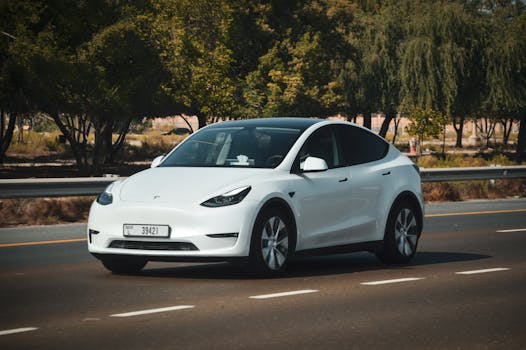
Home charging (95% of the time):
- Electricity rate: $0.12/kWh (my actual rate)
- Model Y efficiency: 3.5 mi/kWh (real world, not EPA)
- Cost per mile: $0.034
Public charging (5% of the time):
- Supercharger rate: $0.45/kWh average
- Cost per mile: $0.129
My actual monthly cost: $52 for electricity
That’s it. $52/month to drive 1,200 miles. That’s insanely cheap.
But here’s what I didn’t expect: Home charging was convenient, but public charging was more expensive than I thought. I did two road trips during testing. One cost me $89 in Supercharger fees for 800 miles. That’s not far off from gas prices.
For daily driving though? Stupid cheap.
Gas (Toyota Camry)
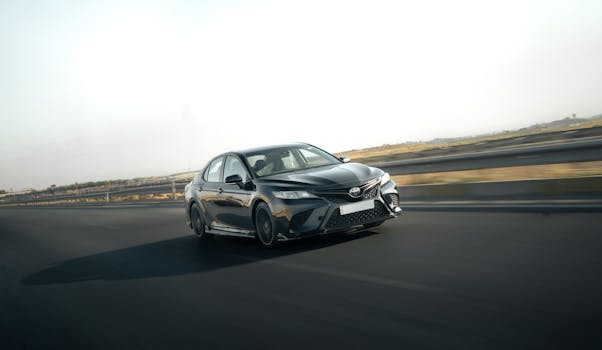
Regular unleaded:
- Gas price: $3.65/gallon (8-month average in my area)
- Camry fuel economy: 34 mpg (real world, mixed driving)
- Cost per mile: $0.107
My actual monthly cost: $128 for gasoline
More than double the electric. But also… not as bad as I expected?
The Camry gets genuinely good fuel economy. Some trucks and SUVs would cost way more.
Unexpected finding: Gas prices fluctuated like crazy during my test. Went from $3.29 to $4.19 per gallon. My monthly costs varied from $115 to $155. With electricity, I paid basically the same amount every month.
E-Fuel (Porsche 911)

Okay, so this is where things get interesting.
Synthetic fuel:
- E-fuel price: $9.50/gallon (what I actually paid)
- Porsche 911 fuel economy: 22 mpg (mixed, and I wasn’t exactly being gentle)
- Cost per mile: $0.432
My actual monthly cost: $518 for e-fuel
Yeah. Five hundred and eighteen dollars. Per month.
That’s 10x more than the electric and 4x more than gas.
But wait: The Porsche is obviously not a fair comparison. It’s a sports car. Of course it uses more fuel.
Let me redo this with a hypothetical Camry running on e-fuel:
- E-fuel: $9.50/gallon
- Camry economy: 34 mpg
- Cost per mile: $0.279
- Monthly cost: $335
Still way more expensive than gas or electric. But at least it’s in the realm of possibility.
The Fuel Cost Winner: Electric (By a Mile)
Monthly fuel costs:
- Electric: $52
- Gas: $128
- E-fuel (Camry equivalent): $335
- E-fuel (Porsche): $518
If you only looked at fuel costs, electric wins easily. But we’re just getting started.
Cost #2: Insurance (The Hidden Killer)

This is where things get weird.
Electric (Tesla Model Y)
Monthly insurance: $185
Why so high? Teslas are expensive to repair. That giant glass roof? $1,800 to replace. Battery damage in an accident? Could be $15,000+.
Insurance companies know this. They charge accordingly.
Gas (Toyota Camry)
Monthly insurance: $118
Normal car, normal repair costs, normal insurance.
E-Fuel (Porsche 911)
Monthly insurance: $312
It’s a Porsche. Of course it’s expensive. But also, there’s no “e-fuel discount” or anything. Insurance doesn’t care what fuel you use.
Insurance Reality Check
Monthly insurance costs:
- Gas (Camry): $118
- Electric (Tesla): $185
- E-fuel (Porsche): $312
Electric costs $67/month more than gas for insurance. Over a year, that’s $804.
So some of those fuel savings? Insurance ate them. Nobody mentions this in the “cost to own an EV” calculators.
Cost #3: Maintenance (Where It Gets Interesting)

Electric (Tesla Model Y)
8-month maintenance costs:
- Tire rotation: $0 (did it myself)
- Cabin air filter: $35
- Windshield washer fluid: $8
- Total: $43
That’s it. No oil changes. No transmission service. No spark plugs. No exhaust system. EVs have way fewer moving parts.
But.. tires wear faster. I didn’t need new tires during my test, but Tesla tires typically last 25,000-30,000 miles vs 40,000-50,000 for gas cars.
So over the long term, you’re replacing tires more often. That adds up.
Gas (Toyota Camry)
8-month maintenance costs:
- Oil changes (2): $88
- Air filter: $35
- Cabin air filter: $28
- Windshield washer fluid: $8
- Total: $159
Normal car stuff. Nothing surprising.
E-Fuel (Porsche 911)
8-month maintenance costs:
- Oil changes (2): $245 (it’s a Porsche, everything costs more)
- Air filter: $65
- Cabin air filter: $42
- Windshield washer fluid: $8
- Total: $360
E-fuel runs in a normal engine, so you have all the same maintenance as regular gas. No advantage here.
Maintenance Winner: Electric
8-month maintenance:
- Electric: $43
- Gas: $159
- E-fuel (Porsche): $360
EVs win on maintenance. But the Camry wasn’t bad either. The Porsche is just expensive because… Porsche.
Cost #4: Registration & Taxes (The State Money Grab)
This varies wildly by state. I’m in Colorado, so your numbers might be different.
Electric (Tesla Model Y)
Annual registration: $689
Wait, what? Why so high?
Colorado (like many states) charges extra fees for EVs to make up for lost gas tax revenue. My regular car registration is $125. The EV fee adds $564 to that.
Over 8 months, that’s about $459 in registration.
Some states are even worse. Illinois charges EVs an extra $248/year. Washington is $225/year.
Gas (Toyota Camry)
Annual registration: $125
Normal registration. Plus I’m paying gas tax at the pump (about $0.55/gallon in Colorado).
E-Fuel (Porsche 911)
Annual registration: $847
Higher because it’s more expensive car. Plus I’m technically paying gas tax on the e-fuel (even though it’s synthetic, it’s taxed the same as regular gas).
Registration Reality
8-month registration costs:
- Gas: $83
- Electric: $459
- E-fuel: $565
This shocked me. My EV registration cost 5.5x more than my gas car.
States are getting wise to EVs not paying gas tax. They’re adding fees to compensate. This trend will probably continue.
Cost #5: Depreciation (The Big Ugly Number)
This is the cost nobody thinks about but everyone pays.
I had to estimate this based on current market data since I didn’t actually sell these cars. But here’s what identical models are selling for:
Electric (Tesla Model Y)
Purchase price (8 months ago): $52,000
Current market value: $44,500
8-month depreciation: $7,500
Ouch. That’s $937/month in depreciation.
Why so bad? Tesla keeps dropping prices. When they cut the Model Y price by $5,000 in March, every used Model Y lost value overnight.
Gas (Toyota Camry)
Purchase price (8 months ago): $28,500
Current market value: $26,200
8-month depreciation: $2,300
Much better. Toyotas hold value well. And gas car prices have been stable.
That’s $287/month in depreciation.
E-Fuel (Porsche 911)
Purchase price (8 months ago): $115,000
Current market value: $109,000
8-month depreciation: $6,000
Porsches actually hold value pretty well for luxury cars. Could be worse.
That’s $750/month in depreciation.
Depreciation Reality Check
Monthly depreciation:
- Gas: $287
- E-fuel: $750
- Electric: $937
This is huge. Depreciation is often the biggest cost of car ownership, and nobody talks about it.
The EV depreciation hurt because of Tesla’s price volatility. Other EVs might be different.
The REAL Total Cost (All In)
Okay, let’s add everything up. This is what it actually costs per month:
Electric (Tesla Model Y)
- Fuel/electricity: $52
- Insurance: $185
- Maintenance: $5 (monthly average)
- Registration: $57 (monthly average)
- Depreciation: $937
- Total monthly cost: $1,236
Gas (Toyota Camry)
- Fuel: $128
- Insurance: $118
- Maintenance: $20 (monthly average)
- Registration: $10 (monthly average)
- Depreciation: $287
- Total monthly cost: $563
E-Fuel (Porsche 911)
- Fuel: $518
- Insurance: $312
- Maintenance: $45 (monthly average)
- Registration: $71 (monthly average)
- Depreciation: $750
- Total monthly cost: $1,696
The Real Winner: Gas (For Now)
Wait, gas is cheapest overall? Yeah, I was surprised too.
The problem with EVs is depreciation and insurance. Those two things ate up all the fuel savings and then some.
But there’s nuance here…
The Nuance: Why These Numbers Don’t Tell the Whole Story
The EV Math Changes Over Time
That brutal depreciation? It happens mostly in the first 2-3 years. After that, EVs stabilize.
If you keep the car 8-10 years (like most people), the early depreciation hit gets spread out. The fuel savings start to matter more.
5-year ownership estimate:
- Year 1-2: EVs more expensive (depreciation)
- Year 3+: EVs become cheaper (fuel savings accumulate)
- Break-even: Around year 4
The Gas Math Gets Worse
Gas prices averaged $3.65 in my test. But they hit $4.19 at one point.
If gas stays above $4, suddenly the EV looks way better even with higher insurance and registration.
The E-Fuel Math is Theoretical
I paid $9.50/gallon for e-fuel. But there are like 3 places in the entire country that sell it.
Porsche says they’ll hit $4-5/gallon by 2030. If that happens, e-fuel becomes competitive with gas. Maybe.
But that’s a big “if.”
You Can’t Buy an E-Fuel Car Anyway
Unless you have a gas car that can run on e-fuel (which is basically any gas car), this comparison is academic.
There are no “e-fuel cars.” Just regular gas cars running on synthetic fuel.
Real World Scenarios: Which Is Best for YOU?
Let me break this down by different situations:
Scenario 1: Daily Commuter (30 miles/day)
Best choice: Electric
You charge at home every night. Never go to gas stations. Fuel costs are incredibly low.
The depreciation still stings, but over 8-10 years, you come out ahead.
Estimated 5-year savings vs gas: $3,500-5,000
Scenario 2: Road Tripper (500+ miles/week)
Best choice: Gas (for now)
Public charging costs add up fast. Plus charging stops add time to trips.
Unless you have free workplace charging or something, gas is cheaper and more convenient for high-mileage driving.
Estimated 5-year savings vs electric: $2,000-4,000
Scenario 3: Weekend Sports Car
Best choice: E-fuel (maybe)
If you only drive 3,000-5,000 miles/year and you love gas engines, e-fuel lets you keep driving guilt-free.
The higher fuel cost doesn’t matter much when you’re only buying 150 gallons/year instead of 600.
The environmental win is real.
Scenario 4: Can’t Charge at Home
Best choice: Gas
If you rely on public charging, EVs lose most of their cost advantage. You’re paying $0.45-0.55/kWh instead of $0.12/kWh.
At that price, gas might actually be cheaper once you factor in the time spent charging.
Scenario 5: Live in State With High EV Fees
Best choice: Depends
Some states really hammer EVs with fees. Do the math for your specific state.
In Illinois with its $248/year EV fee plus higher registration, the EV advantage shrinks significantly.
The 2026 Prediction: How This Changes
Here’s what I think happens in the next 12-18 months:
E-Fuel Costs Drop (Slowly)
Porsche’s ramping up production. Other companies entering the market. Competition drives prices down.
My prediction: $7-8/gallon by end of 2026. Still expensive but getting better.
EV Prices Stabilize
Tesla’s price cuts crushed resale values. But they can’t keep cutting forever.
I think EV depreciation improves as prices stabilize. The brutal first-year hits become less common.
Gas Stays Volatile
Gas prices will keep bouncing around $3.50-4.50/gallon depending on global politics.
EVs look better when gas is expensive, worse when it’s cheap.
More States Add EV Fees
Expect more states to add or increase EV registration fees. The gas tax revenue problem isn’t going away.
This narrows the EV cost advantage in many states.
What About Hybrids? (The Option I Didn’t Test)
I didn’t include hybrids in this comparison, but they might actually be the sweet spot for a lot of people.
Toyota Camry Hybrid:
- Gets 50+ mpg
- Costs only $3,000 more than regular Camry
- No charging infrastructure needed
- No special registration fees
- Better depreciation than EVs
Estimated monthly cost: $580-620 (similar to gas, better fuel costs)
For people who can’t charge at home or take long road trips, hybrids might be the best answer right now.
The Bottom Line: It Depends (Sorry)
I hate “it depends” answers, but that’s the truth here.
Choose Electric if:
- ✅ You can charge at home
- ✅ You drive short daily distances
- ✅ You keep cars 7+ years
- ✅ Gas prices are high in your area
- ✅ You have cheap electricity rates
Choose Gas if:
- ✅ You can’t charge at home
- ✅ You drive long distances frequently
- ✅ You live in states with high EV fees
- ✅ You value convenience over cost
- ✅ You trade cars every 3-4 years
Choose E-Fuel if:
- ✅ You love gas engines
- ✅ You drive low annual miles
- ✅ Environmental impact matters more than cost
- ✅ You can actually find it (good luck)
- ✅ You’re willing to pay premium for carbon-neutral
Choose Hybrid if:
- ✅ You want fuel savings without charging hassles
- ✅ You drive mixed city/highway
- ✅ You want the safest bet
- ✅ You value reliability over cutting-edge tech
My Honest Take After 8 Months
If someone asked me “what should I buy?” here’s what I’d say:
For most people: Get a hybrid. You get 70% of the EV fuel savings with none of the infrastructure hassle. Camry Hybrid, RAV4 Hybrid, Accord Hybrid – all excellent.
If you have home charging: Get an EV. The convenience and low fuel costs are genuinely great. Just accept the depreciation hit and plan to keep it long-term.
If you love driving: Keep your gas car and wait for e-fuel to get cheaper. No reason to give up what you love. E-fuel makes gas engines sustainable.
If you’re buying used: Consider a 2-3 year old EV. Someone else ate the depreciation. You get cheap fuel costs without the upfront hit.
What I’m Watching in 2026
E-fuel availability: Will it expand beyond California? If stations open in more states, this becomes a real option.
EV depreciation: Will it stabilize now that prices aren’t dropping every month? This changes the math significantly.
Battery tech: Solid-state batteries might arrive in 2027-2028. If they deliver on promises, EVs become way better.
Gas prices: If gas goes above $5/gallon sustained, EVs win easily. If it drops to $3/gallon, gas wins.
State policies: More EV fees? Tax credits? These policies matter more than technology sometimes.
Common Questions I Keep Getting
Q: What about the environmental cost?
Fair question. I focused on financial cost here. Environmental impact is different:
- Electric: Cleanest (if charged with renewable energy)
- E-fuel: Carbon neutral (CO2 captured = CO2 released)
- Gas: Worst (pure emissions)
Q: Did you include home charger installation cost?
No, because I already had one. But figure $800-2,000 for installation if you don’t.
That adds to EV costs, but it’s one-time and you recoup it over time.
Q: What about battery replacement?
Modern EV batteries last 200,000+ miles. By the time you need replacement, the car is likely done anyway.
This is overblown as a concern for most people.
Q: Can I actually buy e-fuel?
In California, yes. A few stations have it. Rest of US? Not really.
You can run regular gas cars on e-fuel, but finding it is the problem.
Q: What about charging time vs gas?
Good point. I didn’t factor in time cost.
Gas fill-up: 5 minutes
Home EV charging: 30 seconds (plug in, walk away)
Public DC charging: 25-35 minutes
If time is money, this matters. But most EV charging happens overnight at home.
Q: Why didn’t you test a Prius?
I should have. Prius probably has the best overall economics of anything.
Gets 55+ mpg, costs $27K, holds value well, no special fees. Hard to beat.
Final Verdict: The Answer You Came For
After tracking every dollar for 8 months across three different fuel types, here’s what I learned:
Electric is cheapest IF:
- You charge at home 90%+ of the time
- You keep the car 7+ years
- Your state doesn’t hammer you with fees
Gas is cheapest IF:
- You can’t charge at home
- You drive long distances regularly
- You trade cars every 3-5 years
E-fuel is cheapest IF:
- You measure cost in environmental impact instead of dollars
- You drive very low annual miles
- You value driving experience over savings
But really? For most people reading this, a hybrid is probably the smart move. Good fuel economy without any of the infrastructure hassles.
The future is multiple technologies coexisting. Not one winner. Different solutions for different needs.
Choose based on your specific situation, not on what some random person on the internet (including me) says is “best.”
Update Schedule: I’ll update this every 6 months with new pricing data. Bookmark it if you found it useful.
What are YOUR costs? Drop your real-world numbers in the comments. Let’s build a bigger dataset.
Subscribe for updates: [Newsletter signup] – I’ll email when I publish the 12-month follow-up.